Share The Craco Society Website:

The Crachesi in WWI

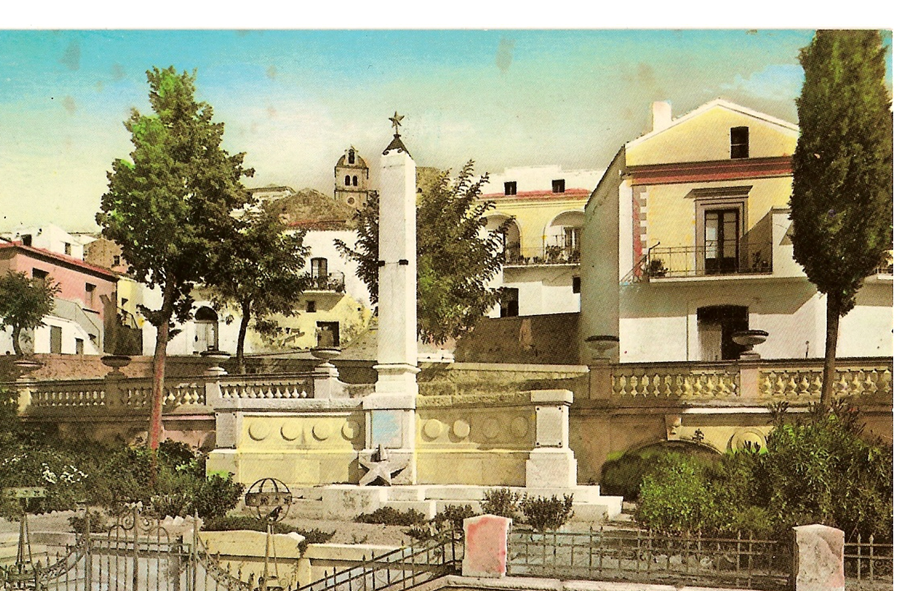
Craco War Memorial

When WWI broke out, America took a position of neutrality but immigrants here were torn by loyalty to their old country and some felt a need to return home. When Italy entered the war on the Allied side in 1915 about 90,000 men returned to Italy to join the army. Military service was the last thing most immigrants sought. Before the war the US, unlike the European countries they came from, did not have a draft. Many immigrated to avoid being forced to serve in their native land’s military. But in 1917 with the US entry into the war they were first asked by the government and then when there were not enough volunteers, forced to serve under the draft, some without having been fully integrated into the US.


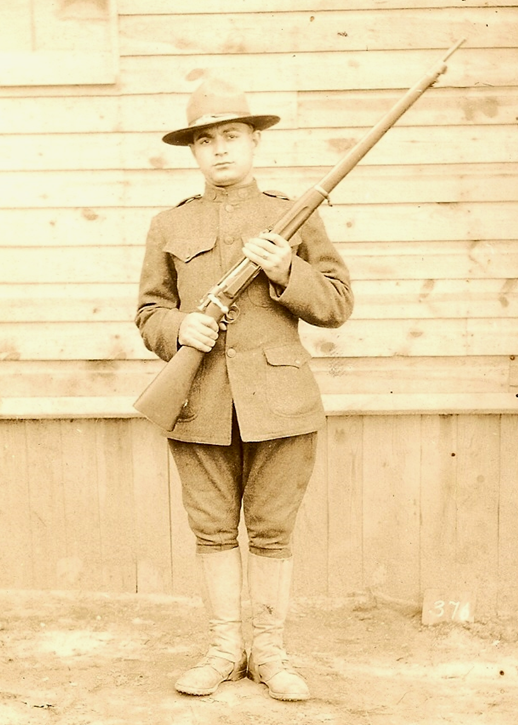
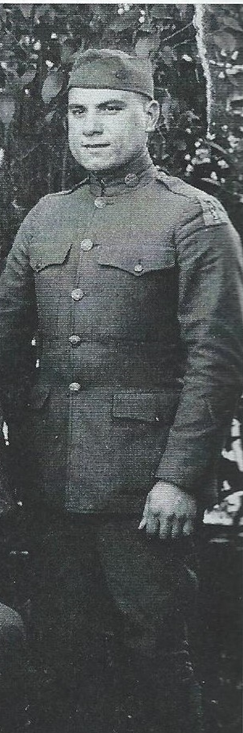
We know the stories of four men with a Crachesi connection who served in the US Army. All were living in Manhattan’s Little Italy neighborhood and there is no doubt they knew each other. Each was drafted and served in 77th Division, what became known as the “Metropolitan Division” because it was made up of men from NYC. They all participated in the Muse-Argonne battle, the largest fought by the US, where there were 1.2 million American soldiers, 22 infantry divisions, 840 planes, 324 tanks, and 2,400 pieces of artillery laying down 4 million shells in the action. That came weeks before the end of WWI in Nov. 11, 1918.


Peter Benedetto

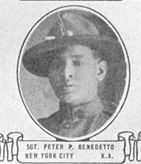
Peter P. Benedetto
Peter P. Benedetto was born Sept 5, 1895 in Craco the son of Domenico and Maria Teresa Paduano. After immigrating in 1899 and attending school he joined his father’s paper stock business and obtained his citizenship. He was the business’ general manager when drafted and reported to Camp Upton for training in September 1917, ultimately reaching the rank of Sargent. The extract of his company’s report tells of his bravery in his last battle, “On Sept. 7, 1918, this soldier led his section across the plateau at Vauxcère, France through a heavy enemy barrage and in plain view of the enemy. When his men became scattered, he remained under shell fire without a thought of personal safety, in order to collect them and place them in their positions. This soldier was known among his comrades for his extraordinary courage, cheerfulness, leadership and devotion to duty. He is interred in France at the Aisne-Marne American Cemetery in Belleau, France. In 1930 the US Government organized the WWI Mothers’ Pilgrimage and offered to send them to their loved one’s final resting place in Europe. Sgt. Benedetto’s mother Teresa made the voyage to visit the gravesite.

Nicola Francavilla

Nicola Francavilla
Nicola Francavilla was born in Craco on May 15, 1894 to Carlo and Lucia Viggiano. He arrived in New York with his family in 1905 and after completing his schooling joined his father in the family’s paper stock business until being drafted in September 1917. He was still an Italian citizen but had filed his papers declaring his intention for US citizenship. He went to Camp Upton for training and was made a Corporal. Arriving in France his unit was moved to the Argonne Forest. On September 28, 1918 orders arrived for them to advance into thick woods where they encountered savage machine gun fire. It was during this day that Corporal Nicolo Francavilla went missing in action. His body was never recovered and his sacrifice is marked by a Tablet of the Missing at the Meuse-Argonne American Cemetery at Romagne, France.

Frank Muzio

Frank Muzio
Francesco Muzio was born in Manhattan on Feb. 28, 1891 to Nicola and Maria Caterina Santalucia. After the death of his father, Frank left school at age 12 and was apprenticed to a blacksmith. Like others in the area he came in contact with Mother Cabrini while she was assigned to St. Joachim’s Church and became an acquaintance of hers. But it was the skills he acquired as a blacksmith that served him well when he was drafted. He was made a “Wagoner,” a position responsible for the horses and their equipment that was vital in the pre-mechanized Army of the era. He entered the Army on Jan. 25, 1918 and after returning from France at the end of the war he opened a cafeteria in downtown Manhattan. He died in 1958 but his life was documented in the book, “Buddy Remembers Then and Now” written by his son Joseph Muzio. Frank would never know that his grandson, David O. Russell would be an Academy Award winning movie director.

Antonio Spera Award

Antonio Spera
Antonio Spera was born in Craco July 25, 1888 to Giovanni and Isabella Forgione. He arrived in the US in 1902 at age 14 where he lived with his brother Donato and worked with him in their barber shop. Antonio was inducted on February 25, 1918 and like the others trained at Camp Upton. He was still an Italian citizen but had filed the papers to become a US citizen. After training he became a private in Company B, 308th Infantry, which would gain fame as the “Lost Battalion.” On Oct. 2, 1918 his unit advanced into Argonne Forest. Over the next six days they were cut off and isolated. Of the 554 that entered the battle only 194 were able to walk out when they were relieved by Allied troops. While under constant attack Antonio distinguished himself by choosing to run up and down the line of his fellow soldiers without a mask alerting them to a gas attack. Antonio’s heroism earned him the Meritorious Service Citation Certificate, which was the predecessor to the Purple Heart. In 1921 he married Camilla Camperlengo in New York and they had three daughters. But the damage to his lungs from his heroic effort led to his early death in 1939.

Transfiguration Church Plaque

Other Losses
Other WWI losses of Italian-American immigrants from Little Italy in New York City are memorialized on a plaque at the Church of the Transfiguration, 29 Mott St. Manhattan. It includes Peter Benedetto and Nicola Francavilla along with 18 others. Meanwhile, in Craco the war also took a toll. Note Storiche sul Comune di Craco, the history of the town tells us about conditions there: “As the first months of 1915 passed, Basilicata was on the fringe of a great dispute between interventionists and neutralists. Craco joined in echoing…in the aversion to the war …. From all over Basilicata they left for the front….They received, in exchange for promises of reform, more than three thousand dead and many more crippled and wounded. In every Lucani town center there is a Monument to the Fallen (constructed under Fascism). Every town had their dead; from perhaps fifteen in small villages to hundreds in the more populated towns…. Craco had eighteen.…

In the war of of 1915-1918 the following Crachesi died:
Soldier Nicola Marisco, Soldier Rocco Mastronardi, Corporal Maggiore Placido Montemurro, Soldier Giuseppe Mormando, soldier Paolo Ragone; Soldier Andre Sanecchia, Corporal Francesco Spera, Soldier Vincenzo Torraco, Soldier Pietro Vaccaro, Sergeant Pietro Benedetto, Soldier Francesco Constantino, Soldier Antonio D‘Ambrosio, Soldier Giovanni De Giorgio, Soldier Leonardo Francavilla, Soldier Nicola Francavilla, Soldier Vincenzo Grieco, Lieutenant Medico Leonardo Grossi, and Soldier Francesco Libonati.
The war caused even more economic hardships. The departure of so many young men left the fields abandoned. …
In the first months of 1919 the wounded soldiers came back, some with permanent disabilities. The dead soldiers would never again see their native land. Some of those returning didn’t find their dear ones. To various other maladies was added the Spanish flu. The epidemic that claimed so many victims between 1918 and 1919 had also arrived in Craco.”

I CRACHESI DURANTE LA PRIMA GUERRA MONDIALE
Allo scoppio della prima guerra mondiale l’America decise di mantenere una posizione di neutralità; nonostante questa presa di posizione, molti tra gli immigrati erano combattuti dall’idea di lealtà verso il loro paese originario, ed alcuni tra loro sentirono l’esigenza di tornare indietro. Quanto l’Italia entrò il conflitto bellico nel 1915, ben 90.000 italiani tornarono a casa per arruolarsi nell’esercito italiano.Tuttavia, il servizio militare rappresentava l’ultimo auspicio per molti immigrati. Prima di entrare a loro volta nella guerra e a differenza degli altri stati europei, gli Stati Uniti non avevano richiamato alle armi i propri cittadini. Proprio per scampare il forzato servizio militare, molti europei abbandonarono i loro territori natali per immigrare negli Stati Uniti. Nel 1917 anche gli Stati Uniti entrarono comunque in guerra. Il governo inizialmente chiese ai propri immigrati, molti dei quali non si erano ancora integrati nel nuovo paese, di partecipare al conflitto su base volontaria: la proposta si tramutò poi in obbligo di presenza quando il numero stesso di iscritti si rivelò non essere sufficiente alle necessitudini. Noi conosciamo la storia di quattro uomini connessi a Craco che servirono all’interno dell’esercito americano. Vivevano tutti nel quartiere di Little Italy, Manhattan, e non c’era dubbio che si conoscessero a loro volta. Ognuno di loro si arruolò, servendo nella 77 divisione, la quale fu rinominata con il nome di “Metropolitan Division”, divisione metropolitana, proprio perchè era composta da membri per lo piu’ residenti a New York City. Tutti parteciparono durante l’offensiva della Mosa-Argonne, la quarta battaglia piu’ grande della prima guerra mondiale all’interno della quale gli Stati Uniti misero in campo ben 1.2 milioni di soldati, 22 divisioni di fanteria, 840 unità aeree, 324 carri corazzati e 2.400 mitragliatrici e pezzi d’artiglieria, che si dice spararono oltre 4 milioni di bossoli nell’azione. Tutto ciò accadde appena prima del termine della guerra, l’11 novembre 1918.

Peter P. Benedetto
Peter P. Benedetto nacque il 5 settembre 1895 a Craco, figlio di Domenico e Maria Teresa Paduano. Dopo essere immigrato nel 1899 e dopo aver terminato gli studi scolastici, si unì al padre nel settore della raccolta e riciclaggio della carta, ottenendo la cittadinanza americana. Quando fu chiamato alle armi e prima di partire per la base di Camp Upton nel 1917, dove poi fu promosso come Sergente, lavorava come responsabile del business famigliare. L’estratto del resoconto scritto dai membri della sua compagnia ci parla del suo coraggio durante la sua ultima battaglia;
“Durante il 7 settembre 1918, questo soldato spinse la sua sezione attraverso l’altopiano di Vauxcère, in Francia, dove il nemico aveva creato una pesante barriera umana e dal quale era completamente visibile. Dopo che i suoi uomini si dispersero, lui rimase sotto il fuoco delle granate senza il minimo pensiero di salvaguardia della propria sicurezza: fu quindi in grado di riprendere i propri uomini e di rimetterli in posizione. Questo soldato era conosciuto tra i suoi commilitoni per il suo straordinario coraggio, la sua allegria, le sue abilità di leader e la sua devozione al dovere”.
Lui è ora sepolto in Francia presso il cimitero americano di Aisne-Marne a Belleau, in Francia. Nel 1930 il governo americano organizzò un pellegrinaggio per le madri dei defunti della prima guerra mondiale, offrendo loro la possibilità di essere mandate in Europa per visitare il luogo di riposo finale dei loro figli. Anche la signora Teresa Benedetto, madre di Peter P. Benedetto, partecipò al viaggio per visitare la tomba del figlio.

Nicola Francavilla
Nicola Francavilla vide la luce per la prima volta a Craco, nato durante la giornata del 15 maggio 1894 da Carlo e Lucia Viggiano. Arrivò a New York con la sua famiglia nel 1905 e dopo aver completato gli studi scolastici si unì a sua volta nel commercio del riciclaggio della carta, fino al giorno del suo arruolamento nel 1917: ancora cittadino italiano, aveva già inviato i documenti ufficiali per diventare statunitense. Nell’ottobre 1917 si trasferì a Camp Upton per l’addestramento, dove ottenne il titolo di caporale. Una volta sbarcato in Francia, la sua unità fu spostata nella foresta delle Argonne. Durante il 28 settembre 1918 gli fu ordinato di avanzare attraverso la fitta vegetazione di quella selva, all’interno della quale si scontrarono con il fuoco selvaggio di una mitragliatrice nemica. Fu proprio in quell’attimo che il caporale Nicola Francavilla venne a mancare, colpito da quel crudele destino. Il suo corpo non fu piu’ ritrovato, ed il suo sacrificio è tutt’ora ricordato su una lapide memoriale per i militari dispersi, posizionata all’interno del cimitero americano di Meuse-Argonne presso Romagne, in Francia.

Frank Muzio
Francesco Muzio nacque a Manhattan il 28 febbraio del 1891 da Nicola e Maria Caterina Santalucia. In seguito alla morte del padre, Frank lasciò la scuola alla giovane età di 12 anni e cominciò a lavorare come apprendista fabbro. Come altri in quell’epoca, anche lui entrò in contatto con Madre Cabrini, proprio mentre lei era stata assegnata alla chiesa di St. Joachim, diventando suo conoscente. Furono proprio le dote acquisite come fabbro che lo aiutarono durante il suo arruolamento nel 1918. Gli fu data la posizione di “Wagoner”, carrettiere, ruolo per il quale Frank era responsabile dei cavalli e del loro equipaggiamento, di vitale importanza per gli eserciti pre-motorizzati di quel periodo. Entrò a far parte dell’esercito il 25 gennaio 1918, e dopo essere tornato dalla Francia una volta terminata la guerra decise di aprire una caffetteria nel centro della città, a Manhattan. Morì nel 1958 ma la storia della sua vita fu documentata in un libro intitolato “Buddy Remembers Then and Now” (letteralmente, “i ricordi di Buddy di adesso e di un tempo”), scritto da Joseph Muzio. Frank non poteva sapere che suo nipote, David O. Russell, sarebbe diventato un importante regista cinematografico, vincitore di un Academy Award.

Antonio Spera
Antonio Spera nacque a Craco il 25 luglio del 1888 da Giovanni ed Isabella Forgione. Arrivò negli Stati Uniti nel 1902 all’età di 14 anni, dove visse e lavorò in compagnia del fratello Donato, lavorando come barbiere. Antonio si registrò nella liste dell’esercito durante la giornata del 5 giugno 1917, spontandosi a Camp Upton come molti altri. Anche lui aveva richiesto di diventare cittadino statunitense, nonostante la sua cittadinanza fosse ancora italiana. Subito dopo il suo arrivo al campo d’addestramento fu inserito come soldato semplice all’interno della 308va fanteria, compagnia B, la quale avrebbe poi ottenuto la fama di “battaglione disperso”. Il 2 ottobre 1918 la sua unità fu inviata presso l’oscura foresta delle Argonne, all’interno della quale la linea telegrafica si interruppe comportando un isolamento dell’intera unità per ben 6 giorni. Dei 554 membri della sua divisione che entrarono in battaglia, solo 194 uomini riuscirono ad uscirne ancora in vita, accolti poi dalle truppe alleate. Sempre sotto costante attacco, Antonio riuscì a distinguersi per il suo coraggio e la sua abilità di stare al passo dei suoi compagni sulla linea di battaglia: correndo da un punto all’altro del fronte, cercava di informare i suoi circa imminenti attacchi gas nemici, nonostante lui stesso combattesse senza maschera. L’eroismo di Antonio gli fece guadagnare un certificato nel quale viene citato il merito del suo servizio, una versione precedente del “cuore di porpora”. Nel 1921 sposò Camilla Camperlengo a New York, dalla quale ebbe tre figlie. Sfortunatamente, il danno ai polmoni causati dai fumogeni e dai gas dei soldati tedeschi in guerra fu tale da causarne il prematuro decesso nel 1939.

Altre perdite
I nominativi di altre vittime tra gli immigrati italo-americani durante la prima guerra mondiale e provenienti da Little Italy a New York City sono ricordati sulla placca memoriale della chiesa della Transfigurazione, a Mott Street 29, Manhattan. I nomi di Peter Benedetto e Nicola Francavilla sono presenti, insieme a quelli di altri 18 uomini. Nello stesso momento Craco doveva fare i conti con il bilancio della guerra appena terminata. Note Storiche sul Comune di
Craco, la storia della città, ci racconta delle condizioni del paese:
“In Basilicata i primi mesi del 1915 trascorsero ai margini del grande dissidio tra interventisti e neutralisti. . . In Craco giunse l’eco dell’avversione alla guerra . . . Anche dalla Basilicata si partì per il fronte. . . Essi ebbero, in cambio di promesse di riforme, più di tremila morti e un altissimo numero di mutilati e di feriti. In tutti i centri lucani c’è il Monumento ai Caduti (costruito sotto il Fascismo). Tutti i centri ebbero i loro morti : da 15 morti nei piccoli comuni ai 200-250 morti nei centri popolosi . . . Craco ne ebbe 18. . . Nella guerra 1915-18 morirono i seguenti Crachesi : sold. Nicola Marsico, sold. Rocco Mastronardi, caporal magg. Placido Montemurro, sold. Giuseppe Mormando, sold. Paolo Ragone, sold. Andrea Sanecchia, caporale Francesco Spera, sold. Vincenzo Torraco, sold. Pietro Vaccaro, serg. Pietro Benedetto, sold. Francesco Costantino, sold. Antonio d’Ambrosio, sold. Giovanni DeGiorgio, sold. Leonardo Francavilla, sold. Nicola Francavilla, sold. Vincenzo Grieco, ten. Medico Leonardo Grossi e il sold. Francesco Libonati. L’economia di Guerra impose tagli. Le partenze di tanti giovani fecero abbandonare le campagne e le donne rimaste in paese raccolsero il grano. . . Nei primi mesi del 1919 rientrarono i soldati feriti, qualche mutilato. I morti non avrebbero più rivisto la loro terra natìa. Alcuni reduci non trovarono i loro cari. Alle varie malattie si aggiunse la spagnola. L’epidemia, che causò tante vittime nel 1918-19, era arrivata anche in Craco.

Posted on in category: Crachesi in America | Tagged | Comments Off on The Crachesi in WWI

Cracotans in The Early Cinema

J. Muzio pictured with his mother.


Craco enjoys a connection to the movie business with it serving as the scene for several movies filmed there. We also know of the connection that producer David O. Russell has to Frank Muzio. But Frank Muzio’s older brother was also a participant in the early days of cinema in America. Giuseppe Muzio (b. 1882 Craco) was the firstborn son of Nicola Muzio (b. 1857 Craco) and Maria Caterina Santalucia (b 1855 Craco). The family, which also included Maria Carmela Muzio (b. 1884 Craco) arrived in New York City in 1885. Once here Nicola and Caterina had two more children, Francesco and Teresa. Both Nicola and Caterina also played a role as witnesses in the 1892 court case of Leonardo Larubbio (see June 2013 Newsletter).

Nicola died in 1899 leaving the family living at 46 Baxter Street. Giuseppe was working in the rag business, most likely for his sister Carmela’s husband, Francesco Paolo Mormando (b. 1879 Craco). On November 25, 1900 Giuseppe married Ellen Corcoran in Manhattan. Their daughter Kathleen arrived in 1904 while they were living in Manhattan. In 1912 the family had moved and were living at 1726 E. 12th Street Brooklyn. Among their neighbors there was Maurice Costello, a renowned actor in that era.


Maurice Costello, played a principal role in early american film making as a leading man, support player and director. With his wife, Mae Costello, a film actress, he had two daughters, Helene and Dolores, who would also go onto have careers associate with the film industry. Dolores Costello married John Barrymore and is the mother of John Drew Barrymore and grandmother of Drew Barrymore. Maurice Costello was associated with Vitagraph Studios which built the first modern movie studio in the US in 1906 at the corner of E. 14th St. and Locust Ave. in the Midwood section of Brooklyn.


Apparently, Kathleen Muzio was a playmate of the two Costello sisters. The Muzio family oral history suggests that Maurice Costello approached Joseph Muzio to help him direct Italian speaking extras and act as an interpreter on several films. From that initial entry into films it soon followed that Kathleen was hired to play roles in some of the silent films. The pinnacle of her acting career was in 1915 when at age 11 she played Theda Bara’s daughter in “Carmen.” Unfortunately, in 1916 Joseph Muzio was stricken with an illness and died in 1916. The family moved back to Manhattan and Kathleen gave up her movie career and went to work in a candy factory.


However, the Muzio family’s long connection to films continues. In addition to David Russell’s work, Matthew Muzio, son of Joe Muzio Society member, works in the industry. Matthew has appeared in 10 films including some done by his cousin David Russell and also was recently in a French film. Matthew has 5 produced films, too.


I crachesi agli albori del cinema


Craco gode di una forte connessione con il mercato cinematografico, servendo come scenografia principale in numerose pellicole. Siamo anche al corrente della relazione che il produttore David O. Russell ha con Frank Muzio: è proprio il fratello maggiore di Frank Muzio che ha contribuito alla nascita del cinema in America.


Giuseppe Muzio (nato a Craco nel 1882) era il primogenito di Nicola Muzio (nato anch’esso a Craco nel 1857) e di Maria Caterina Santalucia (venuta alla luce nel 1855 a Craco). La famiglia, che includeva anche Maria Carmela Muzio (nata nel 1884 a Craco), arrivò a New York City nel 1885. Una volta sbarcati, Nicola e Caterina ebbero due figli, Francesco e Teresa. Entrambi Nicola e Caterina parteciparono come testimoni al caso giuridico del 1982 di Leonardo Larubbio (descritto nell’aggiornamento mensile di Giugno 2013).


Nicolà morì nel 1899, lasciando la sua famiglia che viveva su Baxter Street 46. Giuseppe era impiegato nel settore commerciale degli stracci, molto probabilmente come dipendente del marito di sua sorella Carmela, Francesco Paolo Mormando (nato a Craco nel 1879). Il 25 di Novembre dell’anno 1900, Giuseppe si unì in matrimonio a Manhattan con Elle Corcoran. La loro prima figlia di nome Kathleen venne alla luce nel 1904 mentre i due vivevano a Manhattan. Nel 1912 la famiglia si spostò sulla 12th Street Brooklyn 1726. Tra i loro vicini c’era anche Maurice Costello, rinomato attore del periodo.


Maurice Costello aveva un ruolo principale nei primi film americani, spesso come supporto, attore o anche regista. Dalla moglie, Mae Costello, anche lei attrice sul set, ebbe due figlie, Helene e Dolores, le quali come i genitori avrebbero seguito la carriera cinematografica. Dolores Costello si sposò con John Barrymore, è la madre di John Drew Barrymore e nonna di Drew Barrymore. Maurice Costello era associato a Vitagraph Studios, azienda con la quale avrebbe istituito nel 1906 il primo film-studio moderno degli Stati Uniti, nell’angolo tra E. 14th Street e Locust Avenue, nella sezione di Midwood di Brooklyn.


Apparentemente, Kathleen Muzio era una compagna di lavoro delle due sorelle Costello. La storia della famiglia Muzio, tramandata oralmente, ci indica come Maurice Costello approcciò Joseph Muzio in cerca di un suo sostegno con le traduzioni in italiano dei pezzi extra delle sue pellicole o semplicemente chiedendo la sua partecipazione come traduttore nei suoi film. Da quel momento, Kathleen fu introdotta nel mondo della cinematografia e coprì diversi ruoli all’interno di diversi film muti. Kathleen raggiunse il culmine della sua carriera nel 1915, quando a soli 11 anni impersonò il ruolo della figlia di Theda Bara nell’opera di “Carmen”.


Sfortunatamente, nel 1916 Joseph Muzio fu colpitò da una terribile malattia che lo portò alla morte durante lo stesso anno. La sua famiglia decise quindi di ritornare a Manhattan e Kathleen fu costretta ad abbandonare il palcoscenico e a lavorare in un’azienda di canditi. Nonostante ciò, la connessione della famiglia Muzio con il mondo dello spettacolo è ancora salda. Oltre alle opere di David Russell, Matthew Muzio, figlio di Joe Muzio e membro societario, è ancora attivo nel cinema. Matthew ha infatti avuto un ruolo in ben 10 films, l’ultimo dei quali un film francese ed anche alcuni diretti da suo cugino David Russell. Matthew ha anche lavorato come regista.

Posted on in category: Crachesi in America | Tagged , , | Comments Off on Cracotans in The Early Cinema

Rags to Riches: The Doctor and The Saint

With Italian immigrants streaming into New York City in the late 1880s there was tremendous need for support services of all types. One of the responses to this was made by the Catholic Church who sent Italian missionary groups to provide aid. Included in them was Francesca Xavier Cabrini, commonly known as Mother Cabrini, and would become the first citizen of the US to be canonized.

Mother Cabrini

When she arrived on the Lower East Side of New Your in 1889 she allied her group of missionary nuns with St. Joachim’s Church on Roosevelt Street. From then on Mother Cabrini was able to expand services for Italian immigrants.
Like the others she was faced with the same challenges others had in the new world: another culture, without contacts, and not knowing the language.


In 1890 it became clear Italian immigrants needed hospitals to care for the sick. Mother Cabrini took on hospital work founding the Columbus Hospital in New York City before establishing other hospitals in Chicago and Seattle.
Mother Cabrini worked extremely vigorously until 1917 when she died but not before establishing ministries of healing, teaching, caring, giving and reaching out, in cities of the United States, Italy, France, England, Spain, Brazil, Argentina, and Nicaragua. She was canonized in 1946.

Dr. Viggiano


Dr. Viggiano’s business card.

Meanwhile, in 1903 a 27 year old doctor, Donato Viggiano arrived in New York from Craco and began helping the immigrant community on the Lower East Side. Obviously, coming from Craco he was preferred by his “paesani” providing for them and other immigrants in the area from his office at 76 Mott Street. In 1912 he married Elvira Manghise and they established their home in Brooklyn Undoubtedly, Dr. Viggiano crossed paths with Mother Cabrini and supported her efforts by caring for the ill. This connection would become tangible through his affiliation with the Columbus Hospital that she founded. Dr. Viggiano while continuing his work on the Lower East Side and attending to the community there also worked with the Columbus Hospital ultimately taking on an administrative role there. In the 1930s he and his wife were regularly listed in newspapers sponsoring and promoting fund raising events and activities aimed at supporting the hospital during the Depression. Dr. Viggiano continued practicing medicine into the 1950s and passed away in 1972 at the age of 95.


The Columbus Hospital, originally located on E. 20th St., moved to larger facilities in 1913 on E. 34th St. to be able to serve the expanding need. In 1973 the Columbus Hospital merged with the Italian Hospital and was renamed Cabrini Medical Center. It closed in 2008 due to financial difficulties and the buildings that were located then at 227 E. 19th St., Manhattan, NY were acquired by the Sloan-Kettering Cancer Center to operate an outpatient facility.

il Dottore e il Santo
Durante la seconda metà degli anni ottanta del 1800 a New York aumentò considerevolmente la necessità di servizi di supporto e di sostegno, ciò dovuto alla forte immigrazione italiana di quel periodo. Nel cercare di voler far fronte a questo bisogno, uno dei diversi segni di risposta arrivò dalla chiesa cattolica, la quale inviò diversi missionari italiani in aiuto. Tra questi volontari c’era anche Francesca Xavier Cabrini, conosciuta anche sotto il nome di Madre Cabrini, la quale sarebbe diventata il primo cittadino statunitense a venire canonizzato.
Quando lei arrivò nel Lower East Side di New York nel 1889 costituì il proprio gruppo di suore missionarie, facendo riferimento alla chiesa di St. Joachim su Roosevelt Street.


Come tutti, anche lei dovette affrontare le stesse sfide di coloro che arrivarono nel nuovo mondo in quegl’anni: una cultura diversa, la mancanza di contatti solidi e l’impossibilità di parlare la lingua del posto.
Nel 1890 tra gli immigrati italiani divenne chiara l’importanza di dover costruire ospedali per gli ammalati. Madre Cabrini fu pionere in questo ambito, fondando in un primo momento il Columbus Hospital nella città di New York e poi altri ospedali a Chicago e Seattle. Madre Cabrini lavorò con estremo vigore fino al 1917, anno della sua morte. Prima di quell’anno però fu in grado di stabilire centri di cura, d’accoglienza e di educazione, fornendo il suo appoggio e arrivando in diverse città degli Stati Uniti, in Italia, in Francia, in Inghilterra, in Spagna, in Brasile, in Argentina e Nicaragua. E’ stata resa santa nel 1946.


In quello stesso periodo, più precisamente nel 1903, un dottore di 27 anni, Donato Viggiano, arrivò a New York da Craco e cominciò a dare il proprio contributo alla comunità di immigrati del Lower East Side. Ovviamente, arrivando proprio da Craco, era preferito dai suoi paesani ed era per lo più a loro che forniva il suo aiuto dal suo ufficio di Mott Street 76. Nel 1912 sposò Elvira Manghise , con la quale andò a convivere a Brooklyn.
Senza dubbi il dottor Viggiano condivise il percorso umanitario di Madre Cabrini molte volte, supportandola e dando sostegno ai bisognosi. Questa connessione fra i due divenne ancora più chiara dopo l’affiliazione del medico al Columbus Hospital, fondato appunto dalla Cabrini.


Il dott. Viggiano, nonostante continuasse a lavorare nel Lower East Side servendo la comunità locale, cominciò quindi ad essere presente anche nel Columbus Hospital fino ad assumere un vero e proprio ruolo amministrativo e gestionale del centro. Negli anni trenta lui e sua moglie venivano regolarmente menzionati nei giornali locali mentre sponsorizzavano e promuovevano eventi di raccolta fondi ed attività finalizzate a supportare l’ospedale durante la depressione del paese.


Il dottore continuò ad esercitare la sua pratica terapeutica durante gli anni cinquanta del secolo scorso, venendo a mancare nel 1972 all’età di ben 95 anni. Il Columbus Hospital, posizionato inizialmente su E. 20th street, fu rilocato nel 1913 in un ambiente più spazioso su E. 34th street in modo da far fronte al crescente bisogno di supporto. Nel 1973 il Columbus Hospital fece una fusione con l’ospedale italiano e fu rinominato Cabrini Medical Center. Ha chiuso nel 2008 a causa di difficoltà finanziarie e gli edifici che furono spostati su 227 E. 19th street a Manhattan, New York, sono stati acquisiti dal Sloan-Kettering Cancer Center come struttura per le visite ambulatoriali.

Posted on in category: Crachesi in America | Tagged , , , | Comments Off on Rags to Riches: The Doctor and The Saint

Rags to Riches: A Changing Scene – 58 Mulberry St.

58 Mulberry St, 1942

The connection Cracotans have to New York’s Little Italy is not unique. The area served as the home for many immigrant groups from the mid-1800s through today.

Italians first started populating the area in the l880s. The Crachesi were among them with about 400 living in the area by 1900. Over the next 24 years the number grew to several thousand when you consider the 1500 immigrants from Craco and their children and grandchildren who were born in the US. Cracotans often inhabited the same tenement buildings as their paesani. Looking at the concentrations in US Census reports, the impression is the tenements may have been a bit like Craco with families living on different levels of the buildings, a bit like living on different levels of the town back in Italy. Like Craco, the immigrants in New York worked close to where they lived. The photograph on the above, taken in 1942 is the business of Angelo Gragno at 58 Mulberry Street. The doorway to the left is a tenement at 56 Mulberry. It was inhabited by many families from Craco including Joseph Camperlengo. He recalls living there saying, “We were all family in that building.  It was like the whole building was our home.  We were constantly running up and down the stairs to visit and play with cousins.”

58 Mulberry St., 2012

Similar stories could be told about buildings that were Cracotan enclaves on Baxter, Cherry, Mott, and Roosevelt streets. The bakery was owned by Joe’s maternal grandfather Angelo Gragno from Avellino. Member Dr. Henry Camperlengo worked there and has stories of selling pizza for a nickel a slice. How things have changed. Pizza doesn’t cost a nickel any longer and the old census reports show our ancestors paid about $24/month for an apartment. Today an apartment at 56 Mulberry Street goes for $2100/month! The population of the area has changed too with Italians giving way to new immigrants. And 58 Mulberry Street changed too, as shown, it is no longer a bakery. For those of us in North America with each generation that passes we become less Cracotan, less Italian, and more American or Canadian. Preserving stories like Joe Camperlengo’s is an important way to keep a connection to our past.

Share your memories with your family, friends and anyone else that will listen.


Un Cambio di S

cena – 58 Mulberry St.

La connessione crachese presente con Little Italy di New York non è del tutto unica. Quest’area infatti fungeva da base abitativa per molti gruppi di immigrati, sbarcati dal 1800 fino ad oggi.

Gli italiani cominciarono a popolare questo territorio intorno al decennio del 1880. Tra di essi vi erano anche i crachesi, il cui numero intorno al 1900 ammontava a ben 400 soggetti. Nei primi 24 anni del secolo scorso il loro numero crebbe notevolmente fino a raggiungere le diverse migliaia: basta considerare che solo 1500 figli di immigrati crachesi nacquero sul suolo americano, per noi parlare dei loro figli e nipoti.

I crachesi occupavano spesso gli stessi palazzi in cui risiedevano i loro compaesani. Se si da un’occhiata alla demografia abitativa riportata dal censimento degli Stati Uniti di quel periodo l’impressione è che si fosse creata un’altra Craco come in Italia, con famiglie tutte della stessa origine che vivevano negli stessi palazzi uno vicino agli altri, su piani e livelli diversi.

Come a Craco, gli immigranti di New York erano soliti lavorare vicino a dove vivevano. La fotografia visibile in alto, scattata nel 1942, raffigura la bottega di Angelo Gragno, su Mulberry Street 58. La porta a sinistra lascia accedere all’abitazione di Mulberry Street 56, la quale era abitata da molte famiglie, tra le quali anche quella di Joseph Camperlengo.
Riquardo alla vita in quell’edificio, ci dice: “c’erano molte famiglie al suo interno. E’ come se l’intero palazzo fosse una casa unica. Noi correvamo constantemente su e giù per le scale per trovarci e per giocare con i nostri cugini”.
Storie simili possono essere raccolte anche da altri immigrati che vivevano su Baxter, Cherry, Mott e Roosevelt street.

Il forno era di proprietà del nonno materno di Joe, Angelo Gragno da Avellino.
Il membro del gruppo dottor Henry Camperlengo era solito lavorare in quella bottega e ricorda molte storie di come lui vendeva la pizza al prezzo di circa un nickel a trancio.

Come sono cambiate le cose da allora. La pizza non costa più un nickel, tra l’altro un vecchio censimento ci riporta come i nostri antenati pagassero un affitto di circa 24 dollari al mese per un appartamento. Oggi il prezzo di un appartamento su Mulberry Street si aggira intorno ai 2100 dollari al mese!

Anche la popolazione dell’area si è modificata, lasciando gli italiani spazio a nuovi immigrati. Oggi il negozio di Mulberry 58 non è più quello di allora, come visibile, soprattutto non è più un forno.

Per tutti coloro che come noi vivono in Nord America, ci rendiamo conto come, con il passare del tempo, ogni nuova generazione diventi sempre meno crachese, meno italiana, e maggiormente americana o canadese. Riuscire a mantenere in vita storie come quella di Joe Camperlengo rappresenta per tutti noi un modo importante per continuare il collegamento con il nostro passato. Condividete quindi i vostri ricordi con le vostre famiglie, i vostri amici e tutti coloro che sono interessati ad ascoltarli.

Posted on in category: Crachesi in America | Tagged , | Comments Off on Rags to Riches: A Changing Scene – 58 Mulberry St.

The Crachesi Immigration to The Americas


The story of the Crachesi immigration to the Americas occurs in two phases. Both phases share common motives — the search for a better life; which is the reason behind all immigration and are usually part of larger events of the eras they occur.

Before the 1880-1924 arrival of Crachesi most immigrants to the US arrived from Western and Northern European nations. Early immigrants were mainly English, Germans, and Scotch-Irish with a small percentage were other Europeans-French, Dutch, Welsh, Swedes, Jews, Irish, Swiss and African slaves who were forced immigrants. By the 1850s 2 million Irish immigrants fleeing the potato famine and 1.5 million Germans fleeing crop failures and the collapse of their democratic revolutions arrived. These immigrants generally were Protestant with some Catholics (particularly the Irish) and their cultures easily meshed into American culture of their era.

Then from 1880—1924, 24 million immigrants arrived primarily from Italy, Croatia, Greece, Poland, Czechoslovakia, Hungry, and Russia. They came for a variety of reasons including economic, social issues, disease, escape from forced military conscription, and religious persecution. This coincided with the boom of the industrial revolution in the eastern US providing opportunities for individuals to fill the need for laborers and created the largest increase in the standard of living and production in history.

These new immigrants faced difficulties in assimilating into American culture that earlier immigrants did not. Most could not speak English, nor were they literate. They typically settled in Eastern seaboard cities and entered low-paying, wage-labor jobs. They filled the growing factories and other jobs such as construction or sewing. Often arriving with little money and forced into substandard housing in the worst sections of the overcrowded cities, their increasing numbers strained the cities causing problems with sanitation, and overcrowding.

Meanwhile, the immigrants created small ethnic communities where they preserved the culture of their homelands by publishing newspapers in their native languages, opening specialty grocery stores, restaurants, establishing churches, synagogues, and schools. But these enclaves could not protect immigrants from discrimination. Native-born Americans blamed the immigrants for the poor conditions and for taking over “their” nation creating prejudices and bias that continues today. These biases were among the underlying reasons for US Immigration Act of 1924 creating a quota system reducing the number of immigrants from southern and eastern

Europe and largely ending the Crachesi migration until the mid-1960s when a new wave arrived. The causes creating the need for the first group of Cracotans to leave the land they inhabited for over a thousand years were multiple and built over a long time. These included economic, social, and political issues that impacted Italy for centuries reaching a peak when the future in Craco no longer offered an opportunity for a better life intersected with better conditions elsewhere.

This occurred twice, from 1880-1924 and again in the mid-1960s after the Frana. The first wave of arrivals from Craco coincides with the great immigration period from 1880-1924 that brought millions of immigrants from Europe to the US. During this period over 1600 Crachesi arrived along with 4 million other Italians.

Posted on in category: Crachesi in America | Comments Off on The Crachesi Immigration to The Americas

Artists Views of Craco

In July 2021, Society member Nancy Mormando Oleksy shared a beautiful painting of Craco done by her daughter Tiffany.   
Nancy tells us, “It is 26×48 inches and I got it framed…” She also mentions, “Just watched the Montedoro movie for the first time.  Wondered how many of my family might have been in the movie or the old movie parts.” 
Nancy tells us, “… Tiffany paints every chance she gets. She also men-tioned that if anyone wants a digital 
copy of the Craco pic, they can have it for free of course, and they could get it printed to a canvas at a place like Costco.” 
To get a digital copy contact the Society by email.  


Craco Watercolor held by Joseph D Rinaldi

stella

San Vincenzo

QuintoJD2

QuintoJD1

Quinto1966

Phyllis Roccanova Brenna

Nancy Oleksy

Monserrato

MarilynnCongedoLandscape

Palmina Barbaro Painting

Marilynn Congedo Archway

Eugene St Marie Rinaldi Homestead

Eugene St Marie held by Rinaldi’s

Eugene St. Marie Painting Held by Bob Rubertone

Eugene St. Marie held by Rinaldi’s

Enzo Rinaldi Painting held by The Craco Society

Ed Sconzo San Vincenzo

Ed Sconzo Craco

Domenica Rinaldi 2015

Craco Ruin HU Steger artist

Craco Convento HU Steger artist

Brooklyn 145

Anna Lucia Nuzzo painting held by The Craco Society

Posted on in category: Artists Views of Craco | Comments Off on Artists Views of Craco

Rags to Riches: Murder on Baxter Street


Conditions in New York City between 1890-1900 changed significantly over the prior decade making it a bit more hospitable for arriving immigrants. The Crachesi arriving, especially towards the later part of the peri-od, saw a different place from that ex-perienced by their fellow townspeople only a few years before.

It is from this period before the turn of the century that stories emerge, from both public and private sources that give us an understanding about their daily lives and experiences here in America. After public outcry over the living conditions, sections of the area known as “Mulberry Bend” were being raised and new tenement buildings were beginning to be erected. Conditions in these newer buildings were better but were still surrounded with older structures and crowding that add-ed stress and difficulty to everyday life. An example of how living in close quarters may have turned ugly can be found in the court records for The People and State of New York against Leonardo Larrubia. The case revolved around the November 15, 1891 murder of Vincenzo Rivirit (mis-spelling of Viverito; this occurred in the court record with the other Cracotan names too.) Viverito was the husband of Maria Maresse (the daugh-ter of Pasquale Maresse the Cracotan-tailor written about in previous newsletters).


Appearing as witnesses in the case were a list of the familiar Cracotan names: Pasquale Maresse, Maria Ferrante, Pasquale Calabrese, Nicola Rubertone, Vitantonio Matera, Angela Mormando, Donato Mormado, Maria Mastronardi, Franceso Lauria, Pasquale Riviello, Vincenzo DeCesare, Francesco Camberlengo. Domenico Manghise, Maria Viverito, Francesco D’Addurno, Rosa D’Addurno, Hanni-bal Cutugno, Caterina Episcopia, Vin-cenzo Episcopia, Vincenzo Matera, Isabella Calebrese, Caterina Muzio, Nicola Muzio, Domenico Avena, Gio-vanni Donadio, Caterina Santalucia, Francesco Elia, Prospero Viggiano, Maria Zafferese, and Vincenzo Maffei. Hannibal C. Cutugno was sworn in as the interpreter and provided the transla-tion of witness testimony from the Cracotan dialect to English.


The opening witness was Pasquale Maresse, whose testimony provided the following background. Vincenzo Viverito returned to Craco from living in New York and married his daughter Maria Giuseppina Maresse in April 1890. Before Viverito returned to Craco he was living in New York City with Rosa D’Addurno. After Viverito left, Rosa D’Addurno began living with Leonardo Larrubia at 47 Baxter Street. Rosa wrote a letter to Pasquale Maresse before the wedding telling him of her relationship with Vincenzo and threatened ill to-wards the couple if they married but the wedding took place. When Vincenzo Viverito and his wife Maria Maresse arrived in New York in December 1890 the stage was set for direct conflict.

On the evening of Sunday Nevember 15, 1891 Vitantonio Matera was holding a christening party at his apartment on 47 Baxter St. Friends and neighbors attending included Larubbia and Viverito. Larrubbia supplied the music by playing the accordion while Rosa D’Addurno played the tambourine. There was dancing until Larubbia and D’Addurno left at about 6 pm. They were followed out by Vincenzo Viverito. Five minutes later shots rang out in the street and Viverito was mortally wounded.

As the other witnesses appeared we get more details about the event but also vignettes of their daily lives and interactions. Nicola Rubertone testified he taught Rosa D’Addurno’s son, Pasquale Calabrese, how to write (Pasquale testified he wrote the threatening letter to Pasquale Maresse for her). Angela Mormando and Maria Mastronardi testified about their observations of events that evening while they washed clothing at the fire hydrant outside their home at 47 Baxter Street. Francesco Lauria gave testimony about being at the public urinal on the street with Larubbio and Viverito after they left the christening. Words were passed between them and a fist fight broke out. He tried to separate them but Larubbia (who had been knocked down in the fight) got up and pulled a pistol shooting Viverito three times. Viverito, still conscious, asked to be carried home, while still holding the wooden pipe he always smoked in his teeth.

Fifteen year old Vincenzo DeCesare testified that he worked but was playing in the street that evening and saw the shots fired. Domenica Manghise (sister of Pasquale Maresse) testified that she had a dispute with Rosa D’Addurno in July, during the celebra-tion of the Feast of Our Lady of Mt. Carmel, over money Rosa owed Dome-nica’s husband and during the encoun-ter Leonadro Larrubia threatened her with his pistol. Francesco D’Addurno testified that he worked as a longshoreman with Larrubia for four months and they discussed committing a crime and how to get away with it if you had enough money to run away to another part of America (Francesco also testified he the godfather to Vincenzo Viverito and Maria Maresse’s infant son.)
Defense witnesses then appeared with Caterina and Vincenzo Episcopia testifying about a fight at an Easter Sunday celebration at Larubbia’s house where Viverito threatened Leonardo and struck Rosa. Isabella Callabrese (daughter of Rosa D’Addurno) also testified to events at that event. Maria Zafferese (aunt of Leonardo) added testimony that Vincenzo Viverito visited her often and threatened to harm Leonardo. Nicola Muzio testified he knew Larrubia since he was a boy and that Viverito was a “quarrelsome man.” Caterina Santalucia, refuted the testimony of 15 year old Vincenzo DeCesare (she reported that everyone called him “Jimmie” and not Vincenzo) saying he could not have observed anything because he was playing “morro” with Antonio Benedetto. Sixteen year old Donato Mormando (son of Nicola Mormando and Caterina Muzio) testified to his observations as he was going out from his home at 47 Baxter St. to get two pints of beer.

Forty year old Rosa D’Addurno then took the stand and testified about her life and relationships with both men ultimately claiming Vincenzo Viverito felt Leonardo Larubbio had committed a “cornuto” against him, even though he now had his own wife, making that the reason there was bad blood between them. Francesco Elia, a butcher with a shop at 5 Roosevelt St., Prospero Viggiano and Vincenzo Maffei, barbers with a shop at 169 Park Row, all testifying to the good character of Leonardo Larrubia.

Then 25 year old Leonardo Larrubbia took the stand in his defense testifying he arrived in New York three years ago. He moved in with Rosa in December 1891 and confirmed he had quarrels with Viverito before the shooting. He told of purchasing a pistol for fifty-cents from an Italian returning home in November 1890. He carried it every Sunday when he was dressed up in his vest pocket and whenever he had “lots of money on my person” (he was carrying $175 the night of the shooting). That Sunday he was going to visit a sick cousin when he met Francesco Lauria who invited him to play cards and they drank “a couple of pints of beer” before Vitantonio Matera arrived and asked him to play his accordion at the christening. He provided his account of the fight and shooting and was also compelled to mention his imprisonment in Italy for assaulting Nicola Torraca and threatening Domenica Parziale with a knife for being a witness against him.

The jury returned a verdict on June 2nd of second degree murder and Larrubia was sentenced to life in prison. This interesting snapshot of a tragedy played out amongst Cracotans in New York the majority of them were struggling daily to improve their lives. Many of the witnesses that appeared in the trial were slowly gaining ground. We know that Prospero Viggiano and his brothers all had long and successful lives. They also were responsible for sponsoring others who came from Craco and helped them learn the trade. Others, such as the Benedetto and Mormando families, were staking claims in the paper stock, rag and junk businesses. The Benedettos are attributed to starting the first major recycling center in New York City in 1896, where they collected rags, newspaper, and trash with a pushcart. This allowed other Cracotans in the trade to had someone who they knew, trusted and could converse in their native dialect to deal with in business. The culmination of all the Cracotan efforts and achievements in New York up this this point came in 1899 with the creation of the Societá San Vincenzo Martire di Craco. Organized as a mutual aid society, by seven individuals representing the community this group would be a central focus of Cracotans in New York for almost half-a-century. Pasquale Maresse, the witness in the Larrubia trial and successful tailor with a business on Spring St., was among the incorporators. As the Cracotans in New York faced the turn of the 20th century the stage was set for a wave of new immigrants to join them in the next decade.
OMICIDIO IN BAXTER STREET

Le condizioni di New York City tra il 1890 ed il 1900 mutarono completamente rispetto al decennio antecedente, rendendo la città un luogo sempre piu’ ospitale per gli immigrati nel quale abitare. I crachesi in arrivo specialmente verso la fine del periodo, videro una New York molto diversa da quella in cui arrivarono i loro predecessori appena qualche anno prima.

E’ proprio in questa sezione temporale di fine secolo che presero piede diversi racconti, ottenuti poi sia da fonti pubbliche che private. Queste storie ci aiutano a comprendere con maggiore facilità come dovesse essere la vita di tutti i giorni degli immigrati e le loro esperienze quotidiane. Dopo notevoli lamentele pubbliche circa le condizioni sanitarie, diverse sezioni dell’area conosciuta come “Mulberry Bend” furono completamente demolite e rimpiazzate da nuovi palazzi. Ciò comportò un notevole miglioramento delle condizioni all’interno dei nuovi edifici, nonostante anche quest’ultimi fossero ancora circondati da strutture piu’ vecchie e sovraffollate, fattore di disagio e difficoltà nella vita quotidiana. Un esempio di quanto pesante potesse essere vivere in quei quartieri vicini può essere intuito informandosi sul caso giudiziario di The People and State of New York against Leonardo Larrubia (“La gente e lo Stato di New York contro Leonardo Larrubia”, in lingua italiana). Il caso riguarda l’assassinio di Vincenzo Rivirit (in realtà “Viverito” a causa di un errore ortografico. Questo tipo di errore era comune sui nomi crachesi durante i casi giudiziari), avvenuto il 15 novembre del 1891. Viverito era il marito di Maria Maresse (figlia di Pasquale Maresse, sarto crachese degno di nota, già menzionato negli aggiornamenti mensili precedenti).

Davanti alla corte apparirono come testimoni una serie di persone, tutte caratterizzate da nomi famigliari crachesi a noi ben comuni: Pasquale Maresse, Maria Ferrante, Pasquale Calabrese, Nicola Rubertone, Vitantonio Matera, Angela Mormando, Donato Mormando, Maria Mastronardi, Franceso Lauria, Pasquale Riviello, Vincenzo DeCesare, Francesco Camberlengo. Domenico Manghise, Maria Viverito, Francesco D’Addurno, Rosa D’Addurno, Hannibal Cutugno, Caterina Episcopia, Vincenzo Episcopia, Vincenzo Matera, Isabella Calebrese, Caterina Muzio, Nicola Muzio, Domenico Avena, Giovanni Donadio, Caterina Santalucia, Francesco Elia, Prospero Viggiano, Maria Zafferese e Vincenzo Maffei. Ad Hannibal C. Cutugno in particolare fu dato il compito di tradurre dal dialetto crachese all’inglese le testimonianze di tutti i presenti.

Il primo ad essere ascoltato fu Pasquale Maresse, il quale fornì la seguente versione dei fatti. Vincenzo Viverito era tornato a Craco dopo aver vissuto a New York e nel 1890 aveva sposato Maria Giuseppina Maresse, figlia di Pasquale Maresse stesso. Prima che Viverito tornasse a Craco, aveva convissuto a New York con Rosa D’Addurno. Una volta partito per l’Italia, Rosa D’Addurno aveva cambiato consorte, ed era andata a vivere quindi con Leonardo Larubbia su 47 Baxter Street. Rosa scrisse una lettera a Pasquale prima del matrimonio di Vincenzo Viverito con Maria Giuseppina, informandolo della sua relazione precedente con Vincenzo stesso. Rosa aveva minacciato la coppia nel caso di matrimonio, ma Vincenzo e Maria Giuseppina, senza troppi scrupoli nè preoccupazioni, si unirono in matrimonio. Quando Vincenzo Viverito e Maria Giuseppina Maresse arrivarono a New York nel dicembre 1890 tutto era già pronto per un conflitto diretto.

Vitantonio Matera aveva organizzato una festa di battesimo per il figlio nel suo appartamento di Baxter Street 47 durante la sera di domenica 15 novembre 1891. Tra gli amici ed i vicini c’erano anche Larubbia e Viverito. Larubbia in particolare era stato arruolato per suonare la fisarmonica, mentre Rosa d’Addurno lo assecondava con il tamburello. L’atmosfera era abbastanza gioviale, caratterizzata da balli e danze, finchè Larubbia e D’Addurno non si allontanarono fuori dall’edificio intorno alle 6 di sera. Vincenzo Viverito gli aveva seguiti fuori. Cinque minuti dopo si sentirono degli spari nella via, seguiti dal macabro spettacolo di Viverito, ferito mortalmente in strada.

Grazie alle ulteriori informazioni fuoriuscite dalle altre testimonianze siamo in grado di ottenere maggiori dettagli sull’evento ma anche di raffigurare il corso della loro vita quotidiana e delle loro interazioni. Nicola Rubertone testimoniò di aver insegnato a scrivere a Pasquale Calabrese, figlio di Rosa D’Addurno. Era stato infatti Pasquale Calabrese stesso a scrivere la lettera di minaccia che Rosa avrebbe poi spedito a Pasquale Maresse. Angela Mormando e Maria Mastronardi fornirono la loro testimonianza, osservando che durante la sera del delitto infatti si trovavano fuori dalle loro case su Baxter Street 47. In quel momento stavano lavando i panni utilizzando l’idrante in strada. Francesco Lauria invece spiegò che lui si trovava nell’urinatoio pubblico in strada assieme a Larubbio e Viverito, una volta usciti dall’abitazione dove si stava festeggiando per il battesimo. Tutto sembrava essere sfociato dopo uno scambio di parole pesanti, quando appunto i due cominciarono a scazzottarsi. Lauria quindi cercò di separarli ma Larubbia (che era finito a terra, ripetutamente colpito ed in evidente difficoltà) riuscì a rialzarsi e a sparare tre colpi di pistola contro Viverito. Viverito, ancora coscente, chiese di essere riportato a casa, tenendo stretto tra i denti quella sua pipa che era solito fumare e portare sempre con sè.

Il quindicenne Vincenzo DeCesare testimoniò che stava lavorando quella sera, che in quell’attimo stava suonando in strada e vide la sparatoria chiaramente. Domenica Manghise (sorella di Pasquale Maresse) confessò di aver avuto una disputa con Rosa D’Addurno nel luglio di quell’anno, durante la celebrazione della festa newyorkese di “Our Lady of Mt. Carmel”. La lite riguardava una somma di denaro che Rosa avrebbe dovuto pagare al marito di Domenica, e proprio durante quell’occasione era stata minacciata di morte da Leonardo Larrubia con la sua pistola. Francesco D’Addurno disse di aver lavorato come scaricatore di porto con Larrubia per quattro mesi e di aver discusso con lui come fosse possibile commettere un crimine uscendone senza nessuna condanna con abbastanza soldi per scappare in un altra parte dell’America (Francesco aveva anche aggiunto di essere il padrino del figlio appena nato di Vincenzo Viverito e di Maria Maresse).

In difesa della coppia c’erano Caterina e Vincenzo Episcopia. Le loro testimonianze parlavano di un litigio scoppiato a casa Larubbia a causa di Viverito, il quale sembrava aver minacciato Leonardo e aver colpito Rosa durante la domenica di Pasqua. Anche Isabella Calabrese (figlia di Rosa D’Addurno) era presente in tribunale. Maria Zaffarese (zia di Leonardo) aggiunse che Viverito l’aveva visitata spesso di recente e che aveva minacciato piu’ volte Leonardo. Nicola Muzio confermò di conoscere Larrubia da quando era ragazzo e sottolineò quanto Viverito fosse una persona particolarmente aggressiva e litigiosa. Caterina Santalucia si oppose alla testimonianza del quindicenne Vincenzo DeCesare (Vincenzo DeCesare era per lo piu’ conosciuto con il nome di Jimmy e non Vincenzo), accusandolo di non aver potuto vedere niente dal momento che stava giocando a “morro” con Antonio Benedetto. Il sedicenne Donato Mormando (figlio di Nicola Mormando e Caterina Muzio) aggiunse ulteriori osservazioni poiché, al momento del fattaccio, stava uscendo da casa sua su 47 Baxter Street per andare a prendere due pinte di birra, potendo involontariamente essere presente davanti ai fatti.

Rosa D’Addurno, ormai quarantenne al momento del delitto, attirò a sè l’attenzione della corte raccontando della sua vita e della sua relazione con entrambi gli uomini. Secondo lei, il motivo della lite e della successiva sparatoria era dovuto al fatto che Vincenzo Viverito si sentisse “cornuto” e che Leonardo Larubbio, a causa del suo coinvolgimento con Rosa stessa, avesse usurpato la sua proprietà, nonostante Vincenzo stesso avesse già un’altra moglie. Francesco Elia, macellaio e proprietario di un negozio di macelleria su 5 Roosevelt Street, assieme a Prospero Viggiano e Vincenzo Maffei, barbieri con un negozio su 169 Park Row, testimoniarono tutti a favore del buon carattere di Leonardo Larrubia.

A quel punto seguì la testimonianza di Leonardo Larrubbia, di appena 25 anni in quel periodo. Lui era arrivato a New York tre anni prima, confermando di convivere con Rosa dal Dicembre 1891 e di aver avuto diversi litigi con Viverito in precedenza. Confermò anche di aver comprato una pistola da un italiano in partenza verso l’Italia nel Novembre del 1890, pagandola cinquanta centesimi. Leonardo la portava con sè ogni domenica quando indossava un abito, tenendola nella tasca interna della giacca, oppure ogni volta che portava con sè “una somma di denaro notevole”. La sera della sparatoria aveva con sè infatti ben 175 dollari. Quella domenica Leonardo stava per andare a visitare un amico malato quando incontrò sul suo tragitto Francesco Lauria che l’invitò a giocare a carte. I due bevvero un paio di pinte di birra prima di incontrare Vitantonio Matera che gli chiese di suonare la fisarmonica durante la festa per il battesimo di suo figlio. Leonardo confermò della lite, dei colpi di pistola e fu costretto anche ad ammettere di un suo periodo di reclusione in Italia dovuto ad un suo attacco contro Nicola Torraca e a delle minacce con un coltello effettuate nei confronti di Domenica Parziale che aveva testimoniato contro di lui.

La giuria esibì il proprio verdetto il 2 di Giugno di quell’anno, condannando Larrubia di omicidio di secondo grado, per cui la punizione fu l’ergastolo.Questa tragica immagine ritrae in parte il ruolo di molti crachesi che vivevano a New York in quel periodo e di come ognuno di loro dovesse combattere tutti i giorni per migliorare le proprie condizioni. Molti dei testimoni che avevano parlato a favore di uno o dell’altro degli imputati stavano infatti costruendo una loro nuova vita. Sappiamo che Prospero Viggiano e che tutti i suoi fratelli furono particolarmente longevi ed ebbero tutti una vita ricca di successo: furono anche particolarmente attivi nello sponsorizzare altri crachesi dall’Italia e nell’insegnare loro come commerciare.

Altri come i Benedetto o i Mormando si erano inseriti nel business della carta, degli stracci e dell’immondizia che raccoglievano e riuscivano e rivendere. I Benedetto in particolare sono considerati i primi pioneri del settore e a loro è attribuito il primo centro di riciclaggio di New York City del 1896. Al suo interno raccoglievano con dei carretti stracci, giornali e rifiuti. Altri crachesi si unirono poi a questo tipo di commercio, vista la vicinanza linguistica, la facilità di comunicazione nel loro dialetto nativo e la fiducia che si poteva istaurare tra di loro. Il culmine del progresso fu raggiunto nel 1899 grazie agli sforzi dei crachesi e ai loro raggiungimenti lavorativi a New York. Il 1899 fu l’anno della creazione della Societá San Vincenzo Martire di Craco.
Il gruppo, stabilito da appena sette rappresentanti della comunità crachese, iniziò come società atta a fornire sostegno reciproco e supporto tra i suoi partecipanti: si sviluppò fino a rappresentare un punto centrale della comunità crachese di New York per quasi cinquant’anni. Pasquale Marrese fu uno dei fondatori, testimone durante il caso Larrubia, famoso sarto e proprietario del suo negozio su Spring Street. Mentre i crachesi a New York si stavano preparando per il passaggio verso il ventesimo secolo, il palcoscenico mondiale stava cambiando e molti nuovi crachesi sarebbero stati pronti per partire dall’Italia durante il decennio successivo.
Posted on in category: Crachesi in America | Comments Off on Rags to Riches: Murder on Baxter Street

Rags to Riches: Paper Stock — A Cracotan Specialty in New York

Paper Stock Truck South Street, New York

The James Gallo & Sons Safe

The Society has assisted many members researching their family histories. Many of early 20th century US records show families involved in a business called “paper stock.” This business nurtured many from Craco and was heavily dominated by them through the mid-century. Today, the paper stock business is more recognizable under the term of “recycling” but during prior times the owners were also known as” dealers in waste paper,” and dealers in “paper mill supplies.”
Loading Bags 520 Water Street

Exactly how the Craceshi entered this business is unknown but an answer to the question may come from some contemporary sources at the turn of the century. Jacob Riis author of How The Other Half Lives observed in the 1880’s that, “…there is money to be made in New York’s ash-barrel, but it was left to the genius of the “padrone” to develop the full resources of the mine that was to become the exclusive preserve of the Italian immigrant.” At that time New York City hired gangs of men to trim ash scows before they were taken to sea for off-loading. Besides being paid a dollar and a half for the day they could keep whatever they found. This provided them with bones, rags, tin cans, and other waste that formed another source of revenue. Thomas Edison filmed scenes as he was developing the movie camera that include ones showing men and boys stuffing paper into burlap bags. New York City, with its heavy concentration of printing trades and office buildings was a prime location for this type of business

The 1907 New York City Directory has a business listing for 103 “Paper Stock” companies and among them are 22 names of business owners that have Crachesi roots. By 1918 White-Orr’s Reference Register listed 79 paper stock businesses in New York City, with 24 of them recognizable as Cracotans. By 1934 the business directory shrunk to 66 listings but 26 were Cracotans. So as the industry contracted over the years the Crachesi expanded their presence; going from 21% of the business owners in 1907 to 39% in 1934.
The bulk of their businesses were located in the Lower Manhattan commercial loft areas that were adjacent to the tenement neighborhood they called home. These were family businesses that sometimes included wives in roles sorting paper into different grades.

Loading Truck New York Street

Benedetto Trucks, 520 Water St, New York

The daily business cycle generally started early in the morning with trucks driving to customer locations where waste paper would be picked up. Back at the warehouse a crew would be sorting the paper into grades. After enough of a grade of paper was sorted it would be baled and stored. The baled paper would be sold to a broker who delivered it to paper mills that converted the scrap paper into new products. Paper grading was an important part of the process since price was related to the type of paper. The sorting of office waste sometime provided surprises and windfalls. Children in paper stock families always had pencils, pens and paper albeit used. But sometimes workers were more fortunate. Besides finding money or other small valuable there are also stories of individuals finding fortunes in bonds that dramatically changed their lives. After WWII changes in technology, urban redevelopment and lifestyle preferences impacted the business putting pressure on the smaller independent business owners.

Posted on in category: Crachesi in America | Tagged , | Comments Off on Rags to Riches: Paper Stock — A Cracotan Specialty in New York

Life in Craco: Daily Life

Posted on in category: Craco Post-Frana Photos | Tagged | Comments Off on Life in Craco: Daily Life

1857 Craco Census

The Craco Census of 1857

The “Stato di popolazione per l’anno 1857” for the “Comune di Craco” provides a unique insight into the town and its inhabitants during that era. This historical document will help Society members learn more about the old town and also provide them with details about any ancestors that were residing there 150 years ago at time before the town and Italy was changed by unification.

The census was submitted to Italian authorities as complete on January 30, 1858 and reflects the status of the town as of year end 1857. The makeup of the town was reported as 594 adult males, 769 adult females, 252 males under 14 years old and 228 females under 12 years old for a total population of 1,843 inhabitants. They resided in 503 separate households.

The folio is formatted in large sheets that measure 16 inches by 10 inches with columns across two pages that tabulate the information recorded by the enumerator. The left hand page captures the location and household composition quantifying the members by factors of relationship to the household head, age, and sex along with totaling the members of the family.

Following is the data that was recorded in the columns of this page of the form.

Street Name (Nome della Strada)

There were only 15 streets identified and their names are listed below.


Casale – households 1- 109


S. Lonardo – households 110 – 125


Monistero – households 126 – 142


S. Rocco – households 143 – 164


Le Tempe – households 165 – 191


Piazza – households 192 – 236


S. Giovanni – households 237 – 242


Ospedale – households 243 – 264


L’Arco – households 269 – 292


Pisterno – households 293- 356


Piazzola – households 357 – 377


Chiesa – households 378 – 405


Lamazza – households 406 – 423


Castello – households 424- 462


S. Barbera – households 463- 481

Blank – households 482 – 503


House No. (Num. della casa se via sia)

The census form had a place for the house number but none were filled in so all fields are blank.

First Name & Surname Of Head of Household (Nomi e Cognomi de’ Propritari delle Case)

The first and last name of the head of the household was listed.

Sequence Number (Num. d’ordine delle famiglie)

Each household was given a separate number running sequentially from 1 through 503 although there were some errors in the numbering sequence. The enumerator skipped numbering household 229, numbered two consecutive households 303, and mislabeled households 300-307 as 200-207.

Family Composition (Famiglie)

Under this large heading details about the family members were tabulated under several subheadings:


Surname (Cognome)


Listed is the last name of each family member. Note, under Italian customs married females retained their maiden names.


First Name (Nomi di tutt’i componenti la famiglia)


Listed is the first name of each family member.


Relationship to Head of Household (Grado di parentela rispetto al capo di famiglia o di domestico)


The following were the entries made during the census for this item:


Cognato, -a (brother-in-law, sister-in-law)


Cugino, -a (cousin)


Domestica (housekeeper)


Figlio, –a (son, daughter)


Figliastro, -a (stepchild)


Figlioccio, -a (godchild)


Fratello (brother)


Genero (son-in-law)


Madre (mother)


Marito (husband)


Moglie (wife)


Niponte (nephew, niece, grandchild)


Nuora (daughter-in-law)


Padre (father)


Sorella (sister)


Suòcero, –a (father-in-law, mother-in-law)


Zio, – a (uncle, aunt)


Age at Dec. 31 (Eta’ d’ anni compiuti al 31 dicembre)


The age in years was written in.


No. Family Members (No. De’ Componenti La Famiglia)


This subheading breaks down family members as follows:


Adults (Adulti)


The categories are Maschi (male) and Femine(female).


Males Under 14 years old (Maschi prima degli anni 14)


Females under 12 years old (Femine prima degli anni 12)


Total (Totale).


The right hand page of the folio has additional information recorded about the conditions in each family including marital status, possession of property, employment, health and legitimacy of birth.

Status (Condizione)

Under this large heading details about the family members were tabulated under several subheadings:


Marital State (Naturale)

The following were the entries made during the census for this item:


Conjugato (married)


Calibe (bachelor, bachelorette, single, unmarried)


Nubile (unmarried woman)


Vedovo (widowed)


Employment (Civile)

There are five columns categorizing employment of the individuals.


Posses property or assets (Possidente di beni stabili di qualunque natura)

There is either a notation of Prosp. or the field is blank.

Employed in Liberal Arts (Impiegati ad arti liberali)

Ecclesiastics, Priests, Friars (Ecclesiastici, Preti, Frati, Monache)

Employed in Labor (Addetti ad art meccaniche)

Unemployed (Mendici)

There is a notation in the appropriate column with one of the following:


Barbiere (barber)

Calzolaio (shoemaker)

Contadino (farm laborer, peasant)

Falegname (joiner, carpenter)

Farmaciso (pharmacist)

Ferraio (blacksmith)

Filatrice (spinner)

Frate (Frair)


Juddiacarro (judiciary, lawyer)

Medico (Doctor)

Mendia (beggar)

Monaca (Nun)

Mugnaio (miller)

Muratore (mason)

Preti (priest)

Proprietario (landlord)

Sacerdote (priest)

Sarto (tailor, seamstress)


State of Health (Stato Di Salute)

The form notes the following should be identified:


If of good conformation (Si de buona conformazione organica)


If there are notable defects (Se con notabili difetti)


If chronically ill or delicate (Se cronico, o eagionevole)


Below are entries made in this column:

Anacoretica (anchoretic, hermit-like)Anghilosato (heart ailment)

Braccio-morzo (cripled arm)

Buona (good)

Cieco (blind)

Deforme (deformed)

Epilettica (epileptic)

Malattia (diseased)

Matto (crazy)

Nano (dwarf)

Pazzo (crazy)

Sordo-moto (deaf & dumb)

Sordo (deaf )

Valetudinario (sickly or weak) 

Zoppo (crippled)


Observations (Observazioni)

The form notes the following should be identified:


Born legitimate or illegitimate (Nato legittimo, o illegittmo).

Died naturally or accidentally (Morto, naturale, o casuale).

New domicile or established (Nuovo domiciliato, e perche).


Immigrant or established (Emigrato, e perche).


Other means of support, lacking any employment, etc. (Altri inezzi di sussistenza, mancando qui defti nella condizionecivile ec.)


Below are the only entries made in this column:

Ligittimo (legitimate)Illegittimo (illegitimate)


The Town Make-up

As might be expected the town was totally based on an agrarian society. The vast majority of the town’s households were employed in various forms of farm labor with their employment listed as “Contodino.” This term, which is often translated as peasant, was much wider in scope and did not define any of the skills and professions that were necessary to manage the farms.

There were 316 households classified as contadino and they were laboring on the land owned by the 164 households listed as “Proprietario” – landlords. There is no way the census could provide an understanding of the interactions between the classes however during this era each Italian “…municipality resembled a large family – intensely loyal to its members and rituals.” The locations of the households on the streets in the town suggest that in some parts of the town they lived together in close proximity regardless of social status, while there were also some streets that were densely populated with peasants, and areas outside the street limits (characterized as “blank”) that were probably farms with no peasants listed.


Proprietario Households

Nome della Strada

Other “Civile” Households


61


Casale (109)


48


8


S. Lonardo(16)


8


7


Monistero (17)


10


7


S. Rocco (22)


15


12


Le Tempe (27)


15


18


Piazza (44)


26


2


S. Giovanni (6)


4


1


Ospedale (21)


20


2


L’Arco (26)


24


5


Pisterno (65)


60


5


Piazzola (21)


16


9


Chiesa (28)


19


1


Lamazza (17)


16


6


Castello (40)


34


0


S. Barbera (19)


19


20


Blank (20)


0


Besides those working the land there were others in the town making up part of the structure.

At the lowest end of the spectrum were 4 households classified as “mendia” – beggars. All four households shared a similarity; they were headed by single women. In one case, a 62 year old widow, who probably had no family to take her in lived alone while in the case of the other three households the three women were all mothers of young children classified as “illegittimo” – illegitimate. In one of the households there was also an older sister residing there that was unmarried and her health condition was noted as “Zoppo” – crippled. There was one other individual in the town classified as mendia and it seems to be an unusual arrangement. This was a 20 year old woman that resided with a peasant family. The head of the household was a widow and the relationship of the 20 year old to the head of the household was classified as a “Domestica” – servant but the younger woman was not in good health being classified as “Valetudinario” – sickly or weak. The other members of this household were two adult sons and an adult daughter all of whom were unmarried and in good health. Perhaps, this was some act of kindness on the part of the household by taking in this sickly girl since it would seem that the other members would be able to perform the duties and chores of the “casa” rather than rely on a domestic.

Supporting the specialized needs of the town were a small group of tradesmen and service providers. Many of these were classified as proprietaro but also listed with the services or trade they provided. Logically, someone operating as a blacksmith, miller or furniture maker would need to own their own property to house the specialized equipment needed to operate their trade. And in the case of the town’s blacksmiths all 3 households owned property with a fourth person in town classified as “Ferraio” that was the unmarried 22 year old son of one of the smiths. There was only one miller and one barber but the services they provided were probably also done by most individuals as part of their household routines and probably utilized the miller and barber for special circumstances.

There were 6 “Filatrice” – spinners, none of whom owned property and were probably processing wool from the farms. There were 3 women who were widowed in this group and lived alone. The one unmarried woman who headed a household also had an unmarried sister living with her whose health was classified as “Pazzo.” There were two older men also listed as filatrice who headed households without children but were married with their wives classified as contadino. Perhaps this trade was available to those who were not able to perform the labor required of a contadino or could not leave their homes.

Along a different line were the 5 households and 7 people classified as “sarto” – tailor or seamstress. There were two households that had two tailors residing in them and working together. In one a father and son who were property owners shared the work and in the other the male head of the household who also was a property owner worked with an apparently unrelated male “domestico’ who was also listed as “zoppo” – crippled. In the other three households the male heads of the household, who were all property owners, were classified as the tradesman. This group, due to their property ownership seemed to be in a better “condizione.”

There were 10 shoemakers in the town. In four households the head was a “calzolaio” but the others in the house were classified as contadino. There was also an older single male who lived alone and practiced the trade. None of these households were property owners. In other cases where the trade’s people were property owners they were for the most part male heads of households. In one case, an older widowed female property owner’s son-in-law who resided with her practiced the trade. And in what seems unique, there was an unmarried older single female practicing the trade and living with her unmarried sister.

The building needs for the town were supplied by the 6 “falegname”– carpenters and 11 “muratore” – masons. Virtually all were property owners and one household even had a father and son who were masons and another son who was a carpenter. In another instance the household’s father and oldest son were tailors and the next oldest son was a mason. There was only one instance where a mason was not a property owner and the rest of his family was classified as contadino.

The town had one individual listed as “Juddiacarro” – meaning judiciary or lawyer who served the needs for their legal service. The town’s medical needs were attended to by 2 “medico” – doctors who were members of the same family and one “farmaciso” – pharmacist. The town’s pharmacist lived in an extended household with his wife, an adult daughter and son, his mother and an aunt. The daughter was listed as “monaca” – nun. The two doctors lived in a unique household that may have been connected with one of the churches in town. The doctor listed as the head of the house was a 62 year old and his relationship was listed as “zio” – uncle and the other doctor was a 26 year old listed as “nipote” – nephew. There were four other members of the household and all were listed as nephews with three classified as “preti” – priest.

Besides this household that reflected Craco’s founding by ecclesiastics were several others made up of members of the church. The last household on Via Monestero was almost certainly the monastery. There were 10 men residing there and classified as “frate” – friars. Interestingly, their names reflected the names of the surrounding towns, for example Fr. Nicola, Fra. Vincenzo, & Giusippe Da Craco, Fra. Prospero & Fra. Domenico Da Ferandina, Fra. Luigi Da Pisticci. The other residents were, Fra. Bernardino, Fra. Paolino, Fra. Salvatore, & Fra. Gennaro Da S. Arcangelo. Dispersed throughout other households were individuals that were classified as “Ecclesiastici.” There were two households that included a “Diacono” – deacon, and in both cases they were the first born sons of widowed mothers who were property owners. There were seven other households that included a preti. They all were property owning households and either the priest residing there was the first born son or he was the head of the house. Besides these individuals there was one “sacerdote” – clergyman who was also the first born son of a property owner. There were two other persons categorized as an ecclesiastic, the two were daughters of an 82 year old widow who while living with her were also listed as nuns.

We also get an understanding of health conditions on the town by examining “Stato Di Salute.” The vast majority of the townspeople were classified as “Buona” – good and only 31 individuals having some other notation. It would seem that when only 2% of the population is suffering from some observable health problems conditions in the towns were indeed “good.” There were 9 individuals who suffered from “valetudinario” – sickly or weak and it was the most common health problem that seemed to be solely borne by the contadino with on one property owner suffering from this but was such a general observation it is impossible to understand a cause. The next most common observation was the 6 individuals classified as “zoppo – crippled. The form of this handicap must have varied but it was only listed for individuals that were contadino, mendia, and domestica. These do not seem to have impacted the majority of the individuals form participating in the society. The domestica was living in the household of a property owner and also was classified as a seamstress. The others were all parts of households with the exception of one 60 year old woman who was unmarried and classified as contadino. There were three individuals suffering from “anghilosato” – a heart ailment. Two of the individuals were teen aged children in the same household of property owners and the other was a teenaged daughter in a contadino household. There were two “epilettica” – epileptic individuals in town who also were active part of society. Both, contadino, they were heads of households, one a 52 year old widow and the other a 52 year old father. The two individuals with mental health problems classified as “matto” and “pazzo” were also part of households only there were in different circumstances. One was a 32 year old woman living with her unmarried sister who was supporting them as a spinner. The other was a 17 year old son in the house of a contadino. The two individuals listed as “deforme” – deformed shared similar circumstances. Both were contadino and unmarried middle-aged women living in households with their sisters. And there were two individuals who were categorized as ““nano” – dwarf which was the description of a 53 year old wife of a property owner’s household, and also of a nine year old daughter of another property owner. There were single instances of “sordo-moto – deaf & dumb, the 14 year old son of a property owner; “malattia” – diseased, classified the situation of a two year old girl living in a contadino household which also had a family member classified as crippled; “anacoretica” for a 38 year wife and mother in the house of a contadino; “braccio-morzo”– crippled arm described a 72 year old contadino who was the head of his household; “sordo” – deaf was the condition of a 48 year old mothering-in-law living with her contadino family, and “ciecco” – blind described the state of a 26 year old unmarried man living with his contadino household.

The other item that was categorized for the inhabitants of the town was “Observazioni” which dealt with legitimacy. There were 25 individuals classified as illegitimate and all were in families classified as mendia or contadino. Most of the individuals were young children living in the households of unmarried mothers and they carried her surname. There were some exceptions for instance there was a 34 year old woman who was a property owner and had a son and daughter classified as illegitimate. There was also the situation of a 30 year old domestic in a large household of a property owner who had who had a 7 year old illegitimate daughter. There was a similar situation with a 31 year old domestic with a 5 year old illegitimate son.

When looking at the surnames appearing in the census there were 320 different names appearing in the household enumeration. There were 129 names that appeared only once. The 30 most common last names are:

Households Surname

38     Mormondo

35     Matera

21     Branda

20     Mastronardi

19     Forgione

19     Galante

17     Rubertone

16     Spera

16     Tanico

14     Grossi

14     Paduano

13     Ferrante

13     Lorubio

11     Santalucia

10     Avena

10     Rivello

10     Viggiano

10     Zafferese

9      Colabella

9      Guarigha

9      Ragone

9      Roccanova

9      Sarubbi

9      Stabile

8      Camperlengo

8      Conte

8      DiPierro

8      Francaville

8      Manghise

When looking at this data 150 years after it was recorded it is difficult to go much further than a rudimentary summary to characterize the town. It is important to remember that for 800 years before this census was taken the townspeople had been building and establishing the social structure and formulating their relationships. For us today, the most important information are the actual details of each household as they are invaluable to any descendants providing a precious insight into their family’s past.

Table of all households listed in the 1857 Craco Census


Strada


HH #


Surname

Monistero

140

Addreco
Casale

84

Adduno
Casale

89

Albano
Casale

103

Albano
Lamazza

406

Albano
Castello

447

Albano
Piazzola

373

Aldessio
Casale

81

Aldunsio
Pisterno 302/204 Aldunsio
Casale

104

Animarito
Monistero

141

Animarito
S. Rocco

158

Anorati
Casale

94

Arena
Piazza

218

Arena
Piazza

226

Arleo
Piazza

227

Arleo
Chiesa

401

Armando
Casale

61

Attariaccio
Casale

62

Attariaccio
Casale

63

Avena
Casale

63

Avena
Pisterno

293

Avena
Pisterno

323

Avena
Pisterno

327

Avena
Pisterno

351

Avena
Pisterno

355

Avena
Chiesa

382

Avena
Castello

448

Avena

484

Avena
Piazza

203

Baldassaro
Piazza

207

Baldassaro
Pisterno

325

Baldassaro
Pisterno

347

Baldassaro
Ospedale

264

Barberio
S. Rocco

143

Barbetta
Casale

12

Barbinieri
Ospedale

260

Barnalla
Piazza

234

Benardone
Ospedale

243

Benardone
Casale

22

Benedetto
Chiesa

395

Benedetto
Casale

4

Beradone
Pisterno

307/207

Beradone
Casale

42

Bernadino
S. Rocco

156

Bernadino
Ospedale

244

Bernadino
L’Arco

277

Bernadone
Pisterno

316

Bernadone
Piazzola

372

Bernadone
Chiesa

399

Bernadone
Lamazza

407

Bernadone
Pisterno

309

Bianculli
Pisterno

341

Bianculli
Chiesa

393

Bianculli
Castello

449

Bianculli
S. Barbera

473

Bianculli

502

Bianculli
Casale

54

Birillio
L’Arco

267

Blangieri
Casale

56

Bona
Piazza

227

Bonilla
Casale

15

Branda
Casale

34

Branda
Casale

54

Branda
Casale

95

Branda
Casale

105

Branda
Monistero

136

Branda
S. Rocco

144

Branda
S. Rocco

145

Branda
S. Rocco

147

Branda
Piazza

200

Branda
Piazza

220

Branda
Ospedale

262

Branda
L’Arco

283

Branda
Pisterno

331

Branda
Pisterno

337

Branda
Pisterno

338

Branda
Piazzola

366

Branda
Chiesa

400

Branda
Castello

425

Branda
Castello

435

Branda
S. Barbera

480

Branda
Pisterno

314

Bresina
Lamazza

408

Brunetti
Piazza

208

Busso
S. Lonardo

110

Caccitore
Casale

53

Calabreze
Monistero

136

Calabreze
S. Rocco

151

Calabreze
S. Rocco

152

Calabreze
Piazza

206

Calabreze
Piazza

211

Calabreze
Piazza

223

Calabreze
Chiesa

405

Cammarota
Monistero

o

Cammarota
Casale

104

Camperlengo
Piazza

230

Camperleng0
Piazza

232

Camperlengo
L’Arco

270

Camperlengo
L’Arco

273

Camperlengo
Pisterno

327

Camperlengo
Pisterno

328

Camperlengo
Piazzola

364

Camperlengo
Le Tempe

182

Cancati
S. Barbera

478

Cantanaso

500

Carighia
L’Arco

275

Carlucci
Casale

32

Caruso
Ospedale

247

Caruso
Ospedale

262

Caruso
L’Arco

265

Caruso

485

Casano
Ospedale

248

Cascio
Chiesa

383

Casella
Monistero

130

Cassano
S. Rocco

148

Cassino
S. Lonardo

124

Castronova
Le Tempe

173

Catansano
Piazzola

369

Chiarito
Piazza

209

Chiarito
Monistero

135

Chimuto
Le Tempe

165

Chimuto
Le Tempe

179

Chimuto
Piazza

213

Cianco
Piazza

198

Cigliano
L’Arco

276

Cigliano
L’Arco

291

Cigliano
Lamazza

415

Cigliano

494

Cinghano
Le Tempe

176

Colabella
Casale

41

Colabella
Casale

47

Colabella
Le Tempe

166

Colabella
Le Tempe

178

Colabella
Piazza

208

Colabella
L’Arco

274

Colabella
Pisterno 306/206 Colabella
Pisterno

329

Colabella
Piazzola

365

Colabella
Casale

93

Conte
Casale

106

Conte
Casale

107

Conte
Le Tempe

169

Conte
Piazza

197

Conte
Piazza

205

Conte
Piazza

231

Conte
Ospedale

247

Conte
Piazza

208

Continaso
S. Giovanni

241

Continaso
Pisterno

310

Continaso
Pisterno

346

Continaso
terMoniso

141

Contosocca
Castello

447

Cuscio
Castello

461

Cuscio
S. Barbera

466

Cuscio
S. Barbera

467

D’ Addiego
Chiesa

403

D’ Addiono
Piazzola

376

D’ Adduno
Pisterno

352

D’ Addurio
Lamazza

412

D’ Addurno
Ospedale

260

D’ Alesandro
Ospedale

259

D’ Ambrosio
Pisterno

334

D’ Aspimonte
Pisterno

336

D’ Aspimonte
Piazzola

372

D’ Aspimonte
Chiesa

387

D’ Aspimonte
Piazza

217

D’ Aspimonte
Ospedale

248

D’ Aspimonte
S. Rocco

156

D’ Aspimonte

500

D’ Effemina

483

D’ Elia
Castello

450

D’ Emma
S. Barbera

468

D’ Emma
Piazza

196

D’ Errico
S. Lonardo

111

D’adduno
Casale

48

D’Alesandro
Pisterno 302/202 D’Anzi
Le Tempe

170

D’Aquara
Ospedale

250

D’Aquara
Ospedale

251

D’Aquara
L’Arco

290

D’Aquara
Piazza

210

D’arretta
S. Lonardo

119

De Cesare
Monistero

133

De Cesare
Le Tempe

170

De Cesare
Le Tempe

179

De Cesare
Pisterno 301/201 De Cesare
Chiesa

395

De Cesare
S. Barbera

466

De Cesare
Casale

96

De Cesare
Casale

101

De Cesare
Castello

455

De Fratello
Piazza

204

De Mario
Ospedale

255

De Palma
Ospedale

260

De Palma
Castello

448

Defino
S. Barbera

480

Defino
Le Tempe

165

Delesore
Casale

46

Delesoro
Casale

33

Delgare
Castello

441

Delopole
Casale

38

Deutici
Piazzola

358

Di Crieco
Piazza

215

Di Fardo
Pisterno

311

Di Giulio
Pisterno

313

Di Giulio
S. Barbera

465

Di Giulio
Ospedale

258

Di Grillo
S. Rocco

143

Di Picano
Piazza

195

Di Pierro
Pisterno

317

Di Pierro
Pisterno

318

Di Pierro
Pisterno

323

Di Pierro
Chiesa

400

Di Pierro
Lamazza

410

Di Pierro
Lamazza

416

Di Pierro
Castello

443

Di Pierro
Ospedale

256

Di Preso
L’Arco

291

Di Sabato
Pisterno 300/200 Di Santo

487

Di Sauto
Chiesa

378

Di Soulo
S. Lonardo

110

Di Vito
S. Rocco

153

Di Vito
S. Barbera

476

Di Vito
Casale

42

Diafilomatti
Casale

85

Dioppronetti
L’Arco

278

Dolcemile
Pisterno

323

Dolcemile
S. Rocco

157

Donadio
Ospedale

252

Donadio
Ospedale

252

Donadio
Pisterno

333

Donadio
Piazza

226

Doti
Casale

74

Doudria
Casale

85

D’Urso
Le Tempe

189

Elia
L’Arco

278

Elia
L’Arco

279

Elia
Pisterno

311

Elia
Pisterno

318

Elia
Pisterno

348

Elia

500

Elia
Ospedale

257

Episcopio
L’Arco

283

Episcopio
Chiesa

394

Episcopio
Piazza

194

Errico
Piazza

201

Errico
Pisterno

332

Errico
Le Tempe

176

Esposito
S. Giovanni

237

Faghiaganiti
Piazzola

376

Ferrandina
Casale

52

Ferrante
Piazza

204

Ferrante
Piazza

205

Ferrante
Piazza

232

Ferrante
S. Giovanni

238

Ferrante
S. Giovanni

239

Ferrante
L’Arco

275

Ferrante
L’Arco

280

Ferrante
L’Arco

282

Ferrante
L’Arco

289

Ferrante
Pisterno

333

Ferrante
Chiesa

392

Ferrante
S. Barbera

470

Ferrante
Ospedale

245

Fittapoldi
Pisterno

343

Fittapoldi
Lamazza

409

Fittapoldi
Lamazza

415

Fittapoldi
Castello

449

Fittapoldi
Casale

1

Forgione
Casale

18

Forgione
Casale

35

Forgione
Casale

50

Forgione
Casale

65

Forgione
Casale

93

Forgione
Casale

100

Forgione
Casale

102

Forgione
S. Lonardo

112

Forgione
S. Lonardo

115

Forgione
S. Rocco

161

Forgione
Piazza

199

Forgione
Ospedale

250

Forgione
Pisterno

308

Forgione
Pisterno

352

Forgione
Piazzola

357

Forgione
Chiesa

386

Forgione

496

Forgione

498

Forgione
Casale

64

Fortuna
Le Tempe

190

Fortuna
Lamazza

411

Fortuna
Lamazza

421

Fortuna
Castello

447

Fortuna
Le Tempe

181

Francavilla
Piazza

228

Francavilla
S. Giovanni

242

Francavilla
L’Arco

269

Francavilla
Lamazza

408

Francavilla

482

Francavilla

483

Francavilla

485

Francavilla
L’Arco

280

Franco
Pisterno

349

Franco
S. Barbera

475

Fuzzi
Pisterno

305/205

Gaetano
Pisterno

335

Gaetano
Castello

458

Gaitano
Casale

1

Galante
Casale

46

Galante
Casale

60

Galante
Casale

68

Galante
Casale

80

Galante
Casale

94

Galante
Casale

100

Galante
S. Lonardo

114

Galante
Monistero

138

Galante
S. Rocco

146

Galante
S. Rocco

150

Galante
Le Tempe

191

Galante
Piazza

212

Galante
Ospedale

258

Galante
Piazzola

377

Galante
Chiesa

378

Galante
Chiesa

379

Galante
Chiesa

388

Galante
Chiesa

390

Galante
Casale

9

Galasso
Casale

26

Galasso
Casale

63

Galasso
S. Rocco

163

Galasso
Pisterno

354

Galasso
Castello

455

Galasso
S. Rocco

149

Galgano
Casale

109

Galicato
S. Lonardo

116

Gallichio
Chiesa

385

Galoppo
Piazza

228

Galotico
S. Lonardo

122

Galtieri
S. Lonardo

123

Galtieri
Pisterno

304/204

Galtieri
Piazzola

362

Galtieri
Casale

79

Gammigrillo
Le Tempe

186

Garanghia

503

Gasperlo
Piazzola

372

Geraldi
Chiesa

384

Geraldi
Lamazza

420

Gerardo
Castello

430

Gesualdi
Castello

436

Gesualdi
S. Rocco

148

Giammatti
Casale

58

Giammino
Pisterno

307/207

Gianna

487

Giocoli

499

Girghatti
Le Tempe

188

Grachi
S. Rocco

149

Granci
Casale

50

Grassi
Casale

66

Grieco
Casale

73

Grieco
S. Lonardo

118

Grieco
Castello

452

Grieco
S. Barbera

474

Grieco
S. Barbera

475

Grieco
S. Barbera

476

Grieco
Casale

31

Grippoldi
Casale

13

Grisaldi
Castello

462

Grisaldi
Casale

31

Grossi
Casale

38

Grossi
Casale

75

Grossi
S. Lonardo

118

Grossi
S. Lonardo

120

Grossi
S. Lonardo

121

Grossi
S. Giovanni

242

Grossi
Pisterno

296

Grossi
Pisterno

304/204

Grossi
Chiesa

402

Grossi
Chiesa

404

Grossi
Chiesa

405

Grossi
Castello

439

Grossi
Castello

456

Grossi
Casale

95

Guariglia
Piazza

214

Guariglia
Ospedale

244

Guariglia
Ospedale

261

Guariglia
L’Arco

285

Guariglia
L’Arco

292

Guariglia
Piazzola

358

Iacavelli
Casale

3

Iacavoni
Casale

31

Iacavoni

482

Grossi
Casale

30

Guariglia
Casale

55

Guariglia
Casale

70

Guariglia
Monistero

131

Iacavoni

492

Iamaro
L’Arco

273

Triunfo
Casale

56

Ianillo

488

Idecco
Casale

3

Inmigrello
L’Arco

272

Itandrea
Monistero

132

Izzo
Castello

454

La Cava
Piazzola

368

La Gualona
Piazzola

371

La Gualona
Castello

451

La Gualona
Ospedale

249

La Guvara
Casale

51

La Inivara
Casale

39

La Padula
Piazza

218

La Petina
Casale

99

La Pilla
Le Tempe

167

La Porchio
Le Tempe

173

La Porchio
Piazza

224

La Porchio
Casale

85

La Porchio
Casale

54

La Porchio
S. Rocco

155

La Porchio
Piazza

232

La Porchio
Piazza

233

La Porchio
Chiesa

384

La Porchio
Chiesa

396

La Porchio
Castello

453

La Porchio
S. Lonardo

110

La Porta
Piazza

234

La Porta
L’Arco

269

La Porta
Pisterno

325

Laino
Pisterno

334

Laino
Casale

39

Lalingua
Pisterno

296

Lapilla
Casale

109

Larosa
Ospedale

253

Larosa
Castello

462

Launia
S. Barbera

474

Lauria
Pisterno

339

Lauria
Le Tempe

188

Lauruzano
Castello

450

Laviero
Monistero

126

Lazazzera
Casale

12

Lazzera
Casale

67

Leannone
Piazza

234

Leone
Casale

6

Lerillo
Monistero

137

Lo Bosco
Piazza

192

Lo Bosco
Castello

437

Lo Bosco
S. Rocco

162

Lo Prato
Casale

90

LoCaso
Pisterno

297

LoCaso
Pisterno

326

LoCaso

500

Lohagua
Castello

444

Lombardi
S. Barbera

477

Lombardi
Ospedale

246

Lombardo
Ospedale

253

Lombardo
Monistero

13

Lorubio
Monistero

137

Lorubio
Piazza

225

Lorubio
Pisterno

312

Lorubio
Pisterno

333

Lorubio
Pisterno

340

Lorubio
Pisterno

351

Lorubio
Lamazza

413

Lorubio
Castello

432

Lorubio
Castello

433

Lorubio
Castello

444

Lorubio
S. Barbera

469

Lorubio
Casale

67

Maffei
S. Barbera

468

Magatti
Le Tempe

176

Magistro
Chiesa

398

Magistro
Castello

434

Magistro
Castello

442

Magistro
Castello

456

Magistro
Piazza

213

Magonni
S. Rocco

159

Malfeso
Monistero

135

Manghise
Piazza

193

Manghise
Piazza

194

Manghise
Piazza

223

Manghise
Ospedale

263

Manghise
L’Arco

290

Manghise
Piazzola

362

Manghise
Piazzola

377

Manghise
S. Rocco

144

Manghise
S. Lonardo

117

Marrese
Monistero

138

Marrese
Casale

60

Marrese
Le Tempe

168

Marrese
Le Tempe

182

Marrese
Ospedale

252

Marrese
Ospedale

262

Marrese
Pisterno

316

Margiotta

494

Marino
L’Arco

277

Marmo
Pisterno

336

Marmo
Piazzola

365

Marmo
Castello

427

Marmo
Casale

84

Maronna
Castello

442

Maronna
Castello

451

Maronna
Casale

16

Marra
Casale

18

Mastronardi
Casale

34

Mastronardi
Casale

37

Mastronardi
Casale

40

Mastronardi
Casale

59

Mastronardi
Casale

91

Mastronardi
Casale

106

Mastronardi
S. Lonardo

123

Mastronardi
Monistero

126

Mastronardi
Monistero

129

Mastronardi
S. Rocco

152

Mastronardi
S. Rocco

154

Mastronardi
Piazza

209

Mastronardi
S. Giovanni

239

Mastronardi
S. Giovanni

241

Mastronardi
Ospedale

251

Mastronardi
L’Arco

286

Mastronardi
Pisterno

314

Mastronardi
Pisterno

319

Mastronardi
Chiesa

393

Mastronardi
Casale

5

Matera
Casale

11

Matera
Casale

14

Matera
Casale

30

Matera
Casale

51

Matera
Casale

53

Matera
Casale

73

Matera
Casale

82

Matera
Casale

84

Matera
S. Lonardo

111

Matera
Monistero

132

Matera
Monistero

135

Matera
S. Rocco

160

Matera
S. Rocco

162

Matera
S. Rocco

164

Matera
Le Tempe

169

Matera
Le Tempe

174

Matera
Le Tempe

183

Matera
Le Tempe

191

Matera
Piazza

199

Matera
Piazza

207

Matera
Piazza

222

Matera
S. Giovanni

237

Matera
Ospedale

258

Matera
L’Arco

279

Matera
Pisterno

295

Matera
Pisterno

337

Matera
Pisterno

338

Matera
Pisterno

343

Matera
Pisterno

353

Matera
Pisterno

355

Matera
Piazzola

360

Matera
Chiesa

380

Matera
Chiesa

389

Matera
Chiesa

391

Matera
Chiesa

399

Matera
Lamazza

417

Matera
Castello

449

Matorrise
Casale

56

Mauriano
Pisterno

345

Mazriotti
Pisterno

347

Mazriotti
Casale

86

Mercadante
Le Tempe

189

Mercante
Pisterno

306/206

Mercante
Casale

66

Miadonna
Chiesa

386

Miadonna
Chiesa

402

Miadonna
L’Arco

284

Minione
L’Arco

274

Molesano
Piazza

226

Molterno
Castello

431

Montari
Casale

13

Montefano
Lamazza

406

Montesano
Casale

41

Mormando
Casale

43

Mormando
Casale

55

Mormando
Casale

59

Mormando
Casale

62

Mormando
Casale

77

Mormando
Casale

81

Mormando
Casale

98

Mormando
Casale

107

Mormando
Casale

108

Mormando
S. Lonardo

113

Mormando
S. Lonardo

124

Mormando
S. Lonardo

125

Mormando
Monistero

129

Mormando
Le Tempe

177

Mormando
Le Tempe

190

Mormando
Piazza

195

Mormando
Piazza

201

Mormando
Piazza

217

Mormando
Piazza

235

Mormando
Ospedale

245

Mormando
L’Arco

267

Mormando
L’Arco

272

Mormando
Pisterno

295

Mormando
Pisterno

297

Mormando
Pisterno

298

Mormando
Pisterno

341

Mormando
Pisterno

342

Mormando
Piazzola

361

Mormando
Piazzola

366

Mormando
Piazzola

367

Mormando
Chiesa

392

Mormando
Chiesa

397

Mormando
Lamazza

407

Mormando
Castello

445

Mormando
Castello

446

Mormando
Castello

453

Mormando
Castello

457

Mormando
Castello

458

Mormando
Castello

459

Mormando
S. Barbera

464

Mormando
Pisterno

331

Muzio
Casale

74

Nardaudria

486

Nardaudria
Piazza

214

Navazio
Casale

96

Nigro
Monistero

133

Nigro
S. Rocco

151

Nigro
Piazza

221

Nigro
Le Tempe

175

Onorati
Lamazza

418

Onorati
Casale

17

Paduano
Casale

47

Paduano
Casale

83

Paduano
Casale

87

Paduano
Casale

88

Paduano
Le Tempe

187

Paduano
Piazza

198

Paduano
Piazza

202

Paduano
Piazza

230

Paduano
S. Giovanni

238

Paduano
Ospedale

256

Paduano
Ospedale

259

Paduano
Ospedale

263

Paduano
Pisterno

339

Paduano

491

Padula
Casale

21

Palidoro
Casale

99

Palumbo
Le Tempe

182

Paone
Pisterno

330

Parisi
Pisterno

299

Parziale
Pisterno

313

Parziale
Casale

102

Parziale
Monistero

127

Parziale
S. Rocco

145

Parziale
Chiesa

397

Parziale
S. Barbera

471

Parziale
Piazza

218

Parzialo
Le Tempe

185

Parzillo
Pisterno

354

Pascanello
Lamazza

413

Pascanello
Castello

437

Pascanello
S. Barbera

465

Pascanello

490

Pascanello
Casale

24

Pascarella
Casale

25

Pashini
S. Rocco

148

Passarelli
Pisterno

308

Passicano
Ospedale

259

Patrocolo
Monistero

126

Patuisa
Pisterno

324

Patuisa
Castello

454

Pefighetti

496

Peloso
Casale

24

Pepe
Lamazza

412

Pepe
Casale

6

Petrocelli

495

Pietro
L’Arco

279

Pignataro
Pisterno

302/202

Pignataro
Pisterno

328

Pignataro
Chiesa

381

Pignataro
Chiesa

387

Pignataro
Chiesa

388

Pignataro
Ospedale

265

Pirretti
Piazza

231

Pitrelli
Casale

97

Pitrello
Casale

32

Piziole
Piazza

233

Plati
L’Arco

275

Plati
Chiesa

392

Polidoro
Chiesa

403

Potenza
Casale

23

Pugliese
Casale

66

Quaranta
Le Tempe

171

Ragone
Le Tempe

189

Ragone
Piazza

196

Ragone
Pisterno

326

Ragone
Piazzola

369

Ragone
Chiesa

388

Ragone
Chiesa

393

Ragone
Castello

445

Ragone

488

Ragone
Piazza

221

Ranculli
S. Rocco

155

Ricardone
Casale

2

Rigirone
Casale

31

Rigirone
Casale

38

Rigirone

486

Rigirorca

487

Rigirorca

489

Rigirorca
Casale

10

Rinaldi
Casale

14

Rinaldi
Casale

19

Rinaldi
Casale

21

Rinaldi
Casale

24

Rinaldi
Casale

29

Rinaldi
Casale

33

Rinaldi
Casale

36

Rinaldi
Casale

49

Rinaldi
Casale

51

Rinaldi
Casale

52

Rinaldi
Casale

57

Rinaldi
Casale

58

Rinaldi
Casale

77

Rinaldi
Casale

92

Rinaldi
Casale

108

Rinaldi
S. Lonardo

119

Rinaldi
S. Lonardo

125

Rinaldi
Monistero

128

Rinaldi
Monistero

139

Rinaldi
S. Rocco

150

Rinaldi
Le Tempe

171

Rinaldi
Piazza

206

Rinaldi
Piazza

212

Rinaldi
Piazza

219

Rinaldi
Piazza

224

Rinaldi
Piazza

235

Rinaldi
L’Arco

265

Rinaldi
L’Arco

287

Rinaldi
L’Arco

289

Rinaldi
Pisterno

294

Rinaldi
Pisterno

303/203

Rinaldi
Pisterno

309

Rinaldi
Pisterno

310

Rinaldi
Pisterno

312

Rinaldi
Pisterno

321

Rinaldi
Pisterno

324

Rinaldi
Pisterno

330

Rinaldi
Pisterno

356

Rinaldi
Piazzola

358

Rinaldi
Chiesa

380

Rinaldi
Chiesa

381

Rinaldi
Chiesa

382

Rinaldi
Lamazza

409

Rinaldi
Castello

424

Rinaldi
Castello

425

Rinaldi
Castello

426

Rinaldi
Castello

428

Rinaldi
Castello

452

Rinaldi
S. Barbera

472

Rinaldi
Casale

95

Rivello
Monistero

130

Rivello
Monistero

134

Rivello
Ospedale

254

Rivello
L’Arco

270

Rivello
Pisterno

349

Rivello
Piazzola

361

Rivello
Chiesa

378

Rivello
Lamazza

413

Rivello
Castello

425

Rivello
Castello

461

Rivillise

497

Rizzo
Piazzola

370

Rizzo
S. Barbera

463

Roberto
Casale

83

Roccanova
Le Tempe

172

Roccanova
Piazza

195

Roccanova
L’Arco

271

Roccanova
Pisterno

345

Roccanova
Castello

436

Roccanova
Castello

440

Roccanova
Castello

441

Roccanova
S. Barbera

470

Roccanova
Casale

71

Romano
S. Lonardo

122

Romano
S. Rocco

149

Romano

501

Romano
Ospedale

243

Rondinelli
Casale

19

Rondinello
Le Tempe

180

Rondinello
Casale

8

Rubertone
Casale

72

Rubertone
Casale

80

Rubertone
Casale

83

Rubertone
Casale

93

Rubertone
S. Rocco

161

Rubertone
Le Tempe

183

Rubertone
Piazza

216

Rubertone
Piazza

217

Rubertone
Piazza

217

Rubertone
Pisterno

350

Rubertone
Piazzola

367

Rubertone
Piazzola

375

Rubertone
Castello

440

Rubertone
Castello

448

Rubertone
Castello

457

Rubertone
Casale

4

Ruibertone
Pisterno

305/205

Russo
Chiesa

404

Russo
Castello

243

Russo
Castello

427

Russo
Casale

75

Sabino
Casale

105

Sabino
S. Lonardo

120

Sabino
L’Arco

288

Salandreso
L’Arco

286

Salerno
Pisterno

303/203

Salerno
Pisterno

325

Salerno
Chiesa

404

Salerno
Piazzola

368

Salimando
Casale

43

Santa Lucia
Casale

44

Santa Lucia
Casale

45

Santa Lucia
Casale

70

Santa Lucia
Casale

103

Santa Lucia
Piazza

192

Santa Lucia
Piazza

203

Santa Lucia
Pisterno

298

Santa Lucia
Castello

437

Santa Lucia
S. Barbera

467

Santa Lucia
Monistero

483

Santa Lucia
Monistero

140

Santucci
S. Rocco

158

Santucci
S. Rocco

163

Santucci
Le Tempe

165

Sarafino
Le Tempe

167

Sarafino
Casale

11

Sarubbi
Casale

86

Sarubbi
Monistero

127

Sarubbi
S. Rocco

160

Sarubbi
Le Tempe

169

Sarubbi
Piazza

219

Sarubbi
Piazza

236

Sarubbi
Pisterno

315

Sarubbi
Piazzola

362

Sarubbi
Chiesa

402

Sassone
Casale

7

Scalese
Casale

69

Scamone
Le Tempe

177

Seccafino
Ospedale

243

Sevillo
Ospedale

254

Sevillo
Pisterno

342

Sillari
S. Barbera

464

Sillari
Pisterno

294

Silvari
Ospedale

249

Simonetti
Casale

26

Simonetti
Casale

60

Simonetti
Casale

87

Simonetti
S. Rocco

159

Simonetti
L’Arco

288

Simonetti
Piazzola

363

Simonetti
Chiesa

401

Simonetti
Casale

74

Sinise
Pisterno

317

Solimando
Castello

459

Solomone
Casale

22

Spera
Casale

23

Spera
Casale

102

Spera
Le Tempe

185

Spera
Ospedale

246

Spera
Ospedale

248

Spera
Pisterno

313

Spera
Pisterno

320

Spera
Pisterno

322

Spera
Pisterno

346

Spera
Piazzola

373

Spera
Piazzola

374

Spera
Chiesa

395

Spera
Chiesa

398

Spera
Lamazza

411

Spera
Castello

438

Spera

489

Spera
Casale

20

Stabile
S. Lonardo

122

Stabile
L’Arco

287

Stabile
L’Arco

292

Stabile
Pisterno

322

Stabile
Pisterno

340

Stabile
Pisterno

350

Stabile
Piazzola

359

Stabile
Piazzola

360

Stabile
Casale

91

Taghinanti
Piazza

209

Taghinardi
S. Lonardo

116

Tamaro
Ospedale

264

Tanaco
L’Arco

268

Tangardi
Piazza

221

Tangiora
Pisterno

332

Tanico
Lamazza

422

Tanico
Castello

423

Tanico
Castello

429

Tanico
Castello

460

Tanico

484

Tanico
Casale

78

Tannico
Casale

89

Tannico
S. Lonardo

118

Tannico
Monistero

139

Tannico
Le Tempe

166

Tannico
Le Tempe

178

Tannico
Le Tempe

184

Tannico
Le Tempe

186

Tannico
Piazza

236

Tannico
Pisterno

327

Tatarulo
Casale

91

Tenante
Casale

92

Tenante
Le Tempe

180

Tezira
Castello

430

Tolitico
S. Rocco

150

Tomisillo
Le Tempe

181

Torraca
Lamazza

412

Torraca
Lamazza

418

Torraca
Lamazza

419

Torraca
Castello

428

Torraca
L’Arco

280

Triunfo
Pisterno

345

Triunfo
Casale

64

Trumisillo
Casale

52

Tuarco
Casale

28

Tuzio
Casale

82

Tuzio
Piazza

216

Tuzio
Pisterno

301/201

Tuzio
Pisterno

337

Tuzio
Pisterno

343

Tuzio
Casale

496

Tuzio
Casale

498

Tuzio
Casale

76

Tuzzi
S. Barbera

475

Vaituro
Casale

8

Valinato
L’Arco

282

Valinato
Chiesa

379

Valinato
Ospedale

255

Valio
Casale

36

Veltre
Piazzola

371

Ventri
Pisterno

356

Vicarola
Chiesa

383

Viccari
Pisterno

320

Vicorola
Pisterno

348

Vicorola
Piazzola

357

Vicorola
Casale

27

Viggiano
Casale

35

Viggiano
S. Lonardo

113

Viggiano
S. Lonardo

114

Viggiano
S. Lonardo

115

Viggiano
Piazza

210

Viggiano
S. Giov’ni

240

Viggiano
L’Arco

275

Viggiano
Pisterno

315

Viggiano
Lamazza

414

Viggiano
S. Giovanni

240

Villone
S. Barbera

465

Viltre
Casale

65

Vitilli
Casale

20

Vito
S. Rocco

147

Vitorelli
Ospedale

258

Vitorelli
Lamazza

410

Vitorelli
Piazza

202

Vivento
Pisterno

299

Vivento
S. Barbera

479

Vivento
L’Arco

281

Vivinto
L’Arco

288

Vivinto
L’Arco

284

Votile
S. Rocco

146

Vozri
Piazzola

374

Zaccaro
Chiesa

390

Zaccaro
Casale

67

Zafferase
Casale

90

Zafferase
S. Rocco

161

Zafferase
L’Arco

266

Zafferase
L’Arco

284

Zafferase
Piazzola

370

Zafferase
Chiesa

394

Zafferase
Castello

433

Zafferase
Castello

438

Zafferase
S. Barbera

469

Zafferase
Monistero

134

Zosangele


Posted on in category: Genealogy | Comments Off on 1857 Craco Census
Top